

The picture of the president of the United States smiling broadly as he met President Hugo Chavez of Venezuela startled me. Our president is a nice guy. Chavez is anything but.
The State Department maintains that Chavez has attacked democratic traditions and has put Venezuelan democracy on life support with unchecked concentration of power, political persecution and intimidation. Foreign Affairs magazine says that Chavez is a power-hungry dictator with autocratic and megalomaniacal tendencies whose authoritarian vision and policies are a serious threat to his people.

In testimony before the Senate, the South American project director for the Center for Strategic International Studies said that Chavez’s government engages in “arresting opposition leaders, torturing some members of the opposition (according to human rights organizations) and encouraging, if not directing, its squads of Bolivarian Circles to beat up members of Congress and intimidate voters — all with impunity.”
In spite of a presidential term limit of six years, Chavez has suggested that he would like to remain in power for 25 years. Hmmm. An autocratic dictator who abuses human rights and undermines democracy being warmly embraced by the American president.
There’s something wrong with that picture.
Then there was the incident of President Barack Obama seeming to bow before King Abdullah of Saudi Arabia at the G-20 summit in London. The president’s people denied it was a bow, but it certainly was a sign of great deference to the dictator of a country that just six weeks ago sentenced a 75-year-old woman to 40 lashes for having been secluded with her nephew after he delivered bread to her home. This is the same Abdullah whom, when asked why Saudi Arabia prohibits the public practice of religions other than Islam, said, “It is absurd to impose on an individual or a society rights that are alien to its beliefs or principles.”
Obama is also pursuing a renewed relationship with Cuba, a country that engages in human rights abuses, including torture, arbitrary imprisonment, unfair trials and executions. Censorship is so extensive that Cubans face five-year prison sentences for connecting to the Internet illegally. And not only is emigration illegal, but even discussing it carries a six-month prison sentence.
Watching all this, I was wondering what the new standards were. How oppressive must a leader be before we determine that he has not merited a hug by the democratic standard-bearer of the free world, the president of the United States?
Yes, I get it. We have to speak to our enemies, and America has to push “reset” on its relationship with many of these countries. We should try to change them through charm. But who said the president himself, rather than a lower-level diplomat, must do so?
And if Obama feels that he has to be the one to greet a man like Chavez, must it be with the kind of ear-to-ear grin that one might show Girl Scouts selling cookies?
In Turkey, Obama boldly declared “the United States is not, and never will be, at war with Islam.” But the person who was at war with Islam, Saddam Hussein, the man who killed nearly 1 million Muslims, was removed by a country that has already paid with the lives of 4,500 of its servicemen and women. The same is true of the Taliban, another group whom the Obama administration is considering talking to, who beat Muslim women in the streets of Afghanistan. Yet the president seems reluctant to publicly identify these real enemies of Islam.
Like many Americans, I have been awed by our president’s capacity to draw those who hate us near. He is a man of considerable charm and grace. But I have to admit that I am increasingly troubled by his seeming inability to call out rogue dictators.
While he was campaigning, Obama promised, “As president I will recognize the Armenian genocide.” But in a press conference in Ankara with President Abdullah Gul, he refused to use the word “genocide” when challenged by a reporter on the issue. As a Jew who does not want the world to forget the Holocaust, I can only imagine the pain of the Armenian community as it struggles to have modern Turkey acknowledge the crime.
Suppose Obama succeeds in building friendships with Chavez, Castro, Ahmadinejad and the Taliban. What then? Does America still get to feel that it stands for something? Will we still be the beacon of liberty and freedom to the rest of the world, or will we have sold out in the name of political expediency?
And do any of us seriously believe that presidential friendship is going to get a megalomaniac like Chavez to ease up on the levers of power, or are we just feeding his ego by showing him he can be a tyrant and still have a beer with the president of the United States? Will the Iranians really stop enriching uranium through diplomacy rather than economic sanctions?
I know that the Bush administration made many mistakes, and I am a fan of President Obama precisely because of his sunny optimism. But Bush was not, as Chavez once called him, the devil, and it could just be that his emphasis on America being the great champion of democracy and freedom, a mantle that was most eloquently articulated by President John F. Kennedy in his inaugural address, is a legacy that ought to belong to Obama as much as it did to his predecessor.
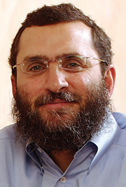
Rabbi Shmuley Boteach is the founder of This World: The Values Network and the author of “The Kosher Sutra.” He wrote this piece for the Jerusalem Post.
Local voices welcomed
J. welcomes your local voice on timely Jewish issues and events of the day. Submissions will not be returned and are subject to editing or rejections. Approximate length: 750 words.
e-mail text, not attachments, to [email protected]
fax to (415) 263-7223
mail to J. the Jewish news weekly,
225 Bush St., #1480, San Francisco, CA 94104