
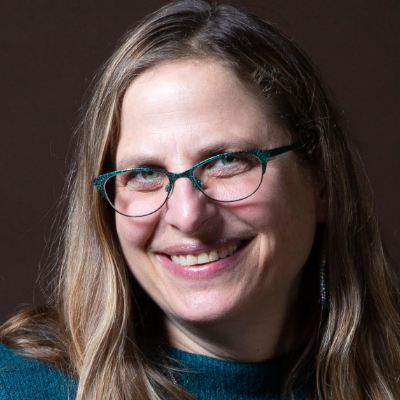
Last year, Mark Waldman saved the life of a woman he had never met. And last month, the Corte Madera resident took an all expenses-paid trip to New York City to meet her.
A 47-year-old engineer and divorced father of two, Waldman donated stem cells that saved the life of Irene Berg, a nurse in Hyde Park, N.Y. The two were not allowed to meet for a year. In the United States, patients and donors are only allowed to meet after a year, mainly to protect the donor if the recipient does not do well after the transplant.
They met for the first time in front of 700 people at the annual fund-raiser for Gift of Life, the organization that brought them together.
“When you’re on the giving end of something like this, you do it because it’s the right thing to do,” said Waldman. “On the receiving end, you’re meeting someone who has saved your life.”
Berg said of their meeting, “It was a very strange feeling. All of a sudden there’s this man walking in who saved my life. I looked at my sister and brother-in-law crying, and Mark’s father crying and my uncle crying. Everyone was crying.”
While both parties described the meeting as joyful, the route to get there surely was not. Berg had suffered for seven years from a Leukemia-like disease called Myelodysplastic Syndrome, which was at first diagnosed when she began bruising easily.
In May 2003, Berg was told she would need a bone marrow transplant. Her immediate family members were tested, but no one was a suitable match. She was told it could take four to six months to find a suitable donor. When her transplant coordinator found out Berg was Jewish, she called Gift of Life.
The Florida-based organization collects tissue samples of Ashkenazi Jews to add to a registry of potential bone marrow donors. Chances are higher of finding bone marrow matches for people of their own ancestry. And so far, Gift of Life — giftoflife.org — is responsible for almost 1,000 transplants.
When she first received her diagnosis, Berg, now 58, said she was afraid of hearing the words, “There’s nothing we can do for you.” But that’s not what she heard. She was told that with the proper donor, her chances of recovery were high.
Meanwhile, Waldman’s father had taught him that one of the greatest acts of tzedakah is to give blood. So Waldman gave often. When he received an e-mail from a friend several years ago, asking him to become a potential bone marrow donor, he immediately signed up. He used a kit that he requested online from Gift of Life. He swabbed the inside of his mouth and mailed in the samples for entry into the registry.
And then he forgot about it.
Several years later, Waldman got a call telling him he may be a potential match. Following a series of tests, doctors determined that all 12 of his antigens matched Berg’s. He was a “perfect match.”
For six months, Waldman made regular visits to Stanford Medical Center, where he was given the drug Philgrastim, which produces a higher amount of stem cells in bone marrow.
Waldman did not mince words when describing the ordeal. “It was very painful,” he said. “This drug makes your bones go nuts. You feel you’re going to explode. This went on for weeks, and each successive shot hurt more.”
Even so, he said, the knowledge that someone, somewhere was fighting a life-threatening illness, made it bearable.
“I kept telling myself that as bad as it is for me, it’s a lot worse for her,” he said.
Which it was. Berg underwent five weeks of intensive chemotherapy at the end of 2003 to kill off her existing unhealthy stem cells. “It knocked me for a loop,” she said.
On Jan. 14, 2004, Waldman’s stem cells were transplanted into her body. They were allowed no contact for a year, though Berg was allowed to send a thank-you card without her name to Waldman — which he immediately put in a place of prominence in his home, “next to the kids’ art projects,” he said.
But then Gift of Life asked them both to participate in their annual dinner, at which they introduce several donors and recipients. Both immediately agreed.
Waldman and Berg were kept apart until that moment in front of everyone, and Waldman joked that before his speech, he had to have two vodka tonics to help calm his nerves. Meeting in front of so many people made it a bit artificial, they said, but it was still incredibly emotional for all those involved. They learned that they both have relatives from Odessa, Ukraine, which made Waldman wonder if they might be distantly related.
Waldman and Berg have since been in touch via e-mail.
“She may need help in the future, and I’d help her again,” said Waldman, adding that if he were to match with someone else, he’d help that person too. “I’d do it in a heartbeat,” he said.
When asked how he shared the process with his 13-year-old son and 11-year-old daughter, Waldman said they supported him every step of the way.
“I told them how important it is to help one person,” he said.
How you can help
The Alan B. Snyder Memorial Bone Marrow Donor Drive takes place at the Jewish Family and Children’s Services booth at “Israel in the Gardens,” from 12 p.m. to 5 p.m Sunday, June 5 at Yerba Buena Gardens.
Snyder, of San Francisco, was a well-known philanthropist and activist in the S.F. Jewish community. In 2004, he died at age 61; years earlier, he received two successful bone marrow transplants.
No blood needs to be taken; only a swab of cells from the inside of the mouth.