
In 1945, Edith Simon Coliver, who fled Nazi Germany in 1938, returned to serve as an interpreter at the Nuremberg trials, translating the pretrial testimony of high-ranking Nazi officer Hermann Goering for American interrogators.
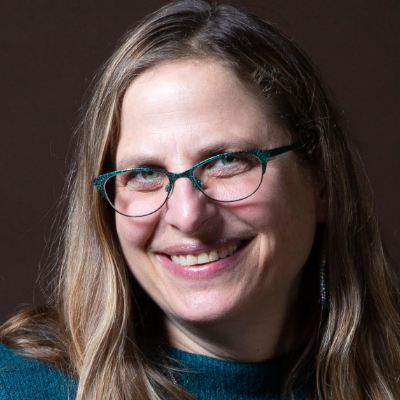
More than half a century later, her daughter, San Francisco attorney Sandra Coliver, has dedicated her life to fulfilling her mother’s legacy — defending victims of human rights abuse and bringing war criminals to justice.
For the past two years, she has served as executive director of the S.F.-based Center for Justice and Accountability, which is currently representing the family of a young economist murdered in the early days of Gen. Augusto Pinochet’s regime in Chile.
In addition, CJA recently sued a former member of Haiti’s High Command — who won $3.2 million in the Florida lottery — for a massacre committed in 1994. Both cases are currently in the works.
Last year Coliver helped win a case against two Salvadoran generals, enabling three torture victims to land a payment of $54 million. The organization also won a victory last year against a Bosnian war criminal living in Georgia.
“What we are doing is tracking down modern-day human rights abusers who come to this country and bringing them to justice,” Sandra Coliver said.
“What we’re doing is made possible by the precedents established by the Nazi hunters in this country, and indeed, the Jewish community in this country has been pressing for new legislation that would enable the U.S. government to more effectively track down these modern-day war criminals.”
Speaking before the University of Cincinnati Law School May 1 in conjunction with Holocaust Awareness Week, she said, “My work in the field of human rights and international justice was directly inspired by the stories my mother told me about the Nuremberg trials.”
She recalled the note written to her mother by her grandfather, before Edith left San Francisco for Nuremberg.
“Edith,” he wrote, “you belong to the generation disenfranchised by Hitler, but as you go to do justice, be just. Remember that you are a Jew.”
A lifelong human rights activist, Edith Simon Coliver, a prominent member of San Francisco’s Jewish community, died in late 2001 at the age of 79. In addition to serving at the Nuremberg trials, she headed the Asia Foundation in the Philippines and co-founded Women’s Interfaith Dialogue on the Middle East.
Daughter Sandra, 48, has used her legal training to further those goals — without losing sight of the human dimension.
“The litigation is a means to an end,” she said. “And the end is to enable our clients to tell our stories and to tell them in such a way that is healing for our clients and empowering for their communities.”
The aim is for those stories, those cases, to “serve to deter atrocities in the future and to make sure the U.S. is not a safe haven for these kinds of abusers.”
Coliver shares the high forehead, cheekbones and prominent features of her mother. Quite thin, she has an air of efficiency about her. In an interview in her San Francisco office, Coliver makes it clear that she’d rather talk about her work than about herself.
Currently, she is working to safeguard the Alien Tort Claims Act, which enables victims of international human rights violations to sue perpetrators who live in or visit the United States. She recently wrote an op-ed piece on the topic, which appeared in the San Francisco Chronicle.
She is also concerned about reining in on human rights abuses in corporations, which she said “has been dormant for the last 60 years…Corporate responsibility was recognized in Nuremberg.”
In addition, the organization continues to work with refugees. Some 500,000 living in the United States have been tortured in their native countries, and most have had no opportunity to bring charges against those responsible, she said. And the trauma remains most acute for those who know that the perpetrators may be living freely in the United States.
Not too long ago, one of CJA’s Salvadoran clients came to see her. He had with him a book he had checked out of the library, “Justice, Not Vengeance” by Nazi hunter Simon Wiesenthal.
“He was very excited,” she said. He asked Coliver whether she had heard of this man.
“We Salvadorans have a lot to learn from him about tracking down perpetrators,” he told her. “This history is relevant to our lives.”
That history was central to Coliver’s life as well — as was social justice at home. One of her early memories is of her father, attorney Norman Coliver, taking her older sister, Susan, to Martin Luther King Jr.’s March on Washington in 1963. Coliver, who was 7 at the time, wanted to go along.
When she was finally allowed to go to a protest, it was against the war in Vietnam.
As an undergraduate at Yale, Coliver was more drawn to philosophy than to law and politics. But an internship with the Human Rights Commission in Geneva exposed her to the world of international human rights. It was the late 1970s, and the Dirty War in Argentina had started, with disappearances of dissidents and others. Human rights violations were also happening on a mass scale in Chile.
She saw countless individuals coming to Geneva with hope, thinking this was the only place they could petition for justice.” It was there that I saw what the law could do.”
Coliver entered Boalt Law School at U.C. Berkeley, and while there, she took one year off to work for Amnesty International.
She then spent eight years working for local attorney Ephraim Margolin. In 1985, she helped represent more than 20 rabbis (and more than 30 other Jewish activists) for protesting on behalf of the Soviet Jews.
The rabbis had chained themselves to the fence in front of the Soviet consulate. A Jewish police sergeant was the senior officer in charge, and ensured that the rabbis were treated with respect.
“Ephraim and I had worked out arrangements with a district attorney so that things would run smoothly at the Hall of Justice,” Coliver recalled, “where the rabbis were to be taken to a special processing room…I was to tail the paddy wagon to make sure it got the rabbis to the right place.”
But Coliver lost the paddy wagon somehow, and the rabbis were taken to a general holding room. The policeman doing intake said the out-of-towners might even have to spend the night until their references could be checked.
“I called the D.A.’s office and asked for the D.A. with whom I had worked out the arrangements, but he wasn’t on duty.”
When she finally got through to one of the supervising district attorneys, she told him the police were holding 20 rabbis somewhere in the Hall of Justice.
“There was a pause on his end of the line and then he said ‘We’re holding 20 rabbis? You’re joking, right?’ He got them all booked and released before the jail closed that evening.”
Margolin called Coliver “an excellent lawyer,” the kind that can easily spend 24 hours a day on a case. “At least she did when she was working for me,” he said. “She has a conscience I wish most of my friends had and is constantly involved in things that matter. Since we as lawyers usually are not, this is very refreshing.”
Coliver spent a few years in London, working for an organization devoted to freedom of expression, and then moved to Washington, D.C. After that, she moved to Sarajevo, Bosnia, where she stayed for three years.
It was after the war, and “it was there that I felt the lessons of my mother very greatly,” she said.
This was the first case of genocide to be committed in Europe since World War II. Not only that, but “it happened in the presence of television cameras and in front of the whole international community so we couldn’t say we didn’t know.”
Spurred by human rights concerns, she said that like her mother at Nuremberg, “I had this sense that history was in the making.”
An additional motivation was “trying to understand the mentality, not so much of the perpetrators, but the mentality of those who stood by and did nothing, and those who stood their ground and resisted, the Righteous Gentiles.”
By 2001, Coliver had been out of San Francisco for 11 years, and she felt it was time to return. She did so in April, and in November her mother was diagnosed with pancreatic cancer. She died a month later.
“It was by the hand of God that I came back when I did, as she was still in good health when I first came,” she said.
Since her return, Coliver has joined the boards of two of her mother’s favorite organizations, the New Israel Fund and Women’s Interfaith Dialogue on the Middle East, of which her mother was a co-founder.
“I joined them because I’m passionate about the values the New Israel Fund promotes, but it was also a way for me to continue to communicate with my mother and channel her energy.”
Bulletin senior editor Janet Silver Ghent contributed to this story.