
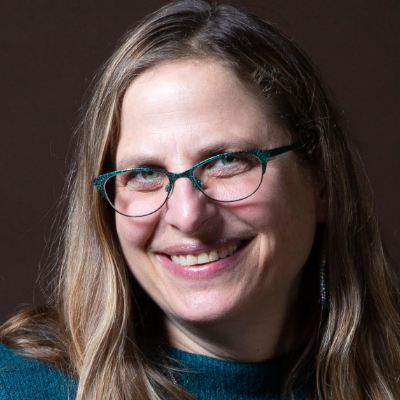
Citing psychological hardship to the family and including pages of testimonials on her behalf, attorneys for deportee Yana Slobodova are hoping she’ll be allowed back into the United States — at least temporarily.
Their request for humanitarian parole was filed last month with the Department of Homeland Security for the San Francisco emigre piano teacher, who was deported back to her native Russia several months ago.
The request, which runs several hundred pages, asks that the department allow the 30-year-old back into the United States for a one-year period, while her permanent residency request is being reconsidered.
“There’s no telling how long the family will have to wait,” said the family’s attorney, Marc Van Der Hout of the San Francisco law firm Van Der Hout, Brigagliano & Nightingale. “Certainly we’ve stressed to the agency the import and hardship that Yana and the entire family is facing with their separation. We’re hopeful they’ll consider it promptly.”
Slobodova, who is pregnant with her second child, is in St. Petersburg with her son, Nikita. After she was deported on Feb. 29, her husband, Alexander Makarchuk, a U.S. citizen, left the Bay Area to live with his mother in Florida. Slobodova’s parents also left the Bay Area, to return to New Jersey, where they had been living. They are eligible for citizenship in the coming months.
Slobodova was recently hospitalized for two weeks, due to complications with her pregnancy. Her parents are with her temporarily, and Makarchuk has been back and forth, but none of them are able to stay with her permanently.
Slobodova entered the United States when she was 22 on a fraudulent visa obtained in exchange for $10,000 from a man who swindled her. During the time she was here, she met and married, gave birth to a son and became a well-liked piano teacher at the Community Arts and Music School in Mountain View, though she was never able to correct her visa problems.
Eventually, she was arrested and then deported.
The request for humanitarian parole includes pages upon pages of exhibits testifying as to the mental and physical states of all members of the family.
“I cannot overcome my depression because I was forcibly separated from my husband and child,” Slobodova testifies. “While I am overjoyed at the blessing of another child, I am terrified to be alone in Russia without my husband or any other family member to support me during my pregnancy.”
Until she was deported, Slobodova was the sole wage-earner of the family, as her husband suffered a serious back injury and could neither work as a plumber nor even lift his son.
A psychological evaluation of Makarchuk maintains that he, too, is depressed.
“Yana and our 2-year-old son Nikita are my entire life,” he says. “Having seen my wife deported, I find it nearly impossible to continue living my life. I felt like my life was ending as I watched Yana disappear on a plane to Russia.”
There are excerpts of letters from parents of Slobodova’s piano students, her colleagues and friends.
“Yana Slobodova is irreplaceable as a teacher to our family and to the musical community of the Peninsula,” writes Christine Welter and William Van Osdol, parents of Teresa, who studied piano with Slobodova.
Also included are excerpts of articles from j., the San Jose Mercury News, The San Francisco Chronicle and the Los Altos Town Crier.
Her attorneys are now working to secure the help of local congressional officials and other elected representatives who indicated they would be willing to help when Slobodova was deported.
“Obviously, we feel that she shouldn’t have been deported in the first place. But we’re now onto the next step, and there’s nothing served by keeping the family separated,” said Van Der Hout.
“I know there’s been a great concern in the community as a whole about the injustice that happened to the family,” he said. “If people are concerned, they might want to contact their representatives and urge them to take further action, as they had before, to see that this family is reunited.”