
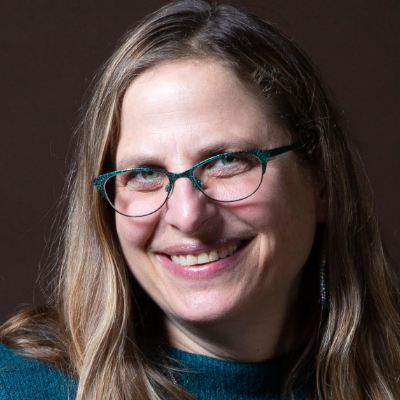
The fact that no one has replaced him as special Middle East coordinator is troubling, to say the least, to Dennis B. Ross. But let him make one thing clear: He has no interest in having his old job back.
The Bush administration “needs someone like me — not me, but someone like me — on the issue, all the time,” Ross said in a recent interview. “Someone with unmistakable authority.” Adding that such a person is not a panacea, he said, “Nothing will change without someone on a full-time basis.”
The Marin County native was here recently and met with area agency heads at the Jewish Community Federation building in San Francisco.
Now a fellow at the Washington Institute for Near East Policy, Ross is writing a book about his role in Middle East peacemaking.
Ross visited the region several weeks ago, and from his meetings, he came away with the feeling that both sides genuinely want to find a way out of the current impasse.
Nevertheless, as he has been doing since the breakdown of the peace talks at Camp David in 2000, Ross placed most of the blame for the stalemate on one man: Palestinian leader Yasser Arafat. Ross believes that Arafat could have sold Barak’s offer to the Palestinians, but he chose not to.
“We were very close to a deal,” he said, “but Arafat couldn’t make a decision.”
The frustration in his voice was apparent as he talked about putting so much energy and time into something that didn’t come to fruition. “It’s very hard,” he said, “but I have no regrets.”
And a cease-fire could happen now, if only Arafat would allow it to.
“Arafat wants it both ways,” he said. On the one hand, he doesn’t want to be associated with the tactics of Osama bin Laden, which is why Ross theorizes that the extremist Palestinian groups that used to carry out suicide bombings have switched to shootings.
On the other hand, “Arafat won’t arrest those who carry out these attacks,” he said. And while Arafat’s government isn’t responsible for them, the fact that he’s not arresting those who are is problematic.
If Arafat were to arrest the terrorists, Israel would have no choice but to ease up on its closure of the West Bank.
Ross, who came to know Arafat well during his tenure in the Clinton administration, described him as a man who avoids making choices. “We have to put him in a position where he has no choice,” he said. Ross said cutting off financial aid to the Palestinian Authority if he did not comply with certain demands was one way to get him to listen.
Ross remains optimistic about the prospects for peace, if only because there is no other choice. “Ultimately, there’s no other alternative,” he said. “They live so closely together, and they can do so in constant struggle and pain or in coexistence.”
Saying that both sides have lost faith in each other, Ross said the Palestinians must provide Israelis with security, and Israelis must provide Palestinians with control over their lives. Neither side thinks of what the other side must endure, he said.
“Both sides are completely consumed by their own grievances,” he said.