

A favorite talmudic story tells of a king whose confiscatory tax policy caused great hardship to his subjects. The king dismissed their protests by saying: “That’s not my problem; that’s your problem. I need money for the kingdom, and if you don’t have enough, that’s too bad.”
One day an elderly man wanted to see the king. “What can you do,” The townspeople asked, “when all of our protests have been to no avail?”
“No worse than you have done so far,” he replied. And off to see the king he went.
When he arrived, the king said, “If you’ve come about the taxes, you’re wasting your time. That’s not my problem that’s your problem …”
 “Oh no, your majesty,” the man answered, “I just thought that since it is such a beautiful day, you would like to join me for a ride in my boat.”
Taken completely by surprise, the king accepted. When the man rowed into the middle of the lake, he took a hammer and an awl and began to chip a hole in the boat’s bottom. “Stop, Stop,” the king exclaimed. “I am going to drown!”
“That’s not my problem,” the man exclaimed. “That’s your problem. You see I’m just making the hole under my own seat.”
The king then realized that we are all connected. We are all responsible for one another, and there is no such thing as just “under my own seat.” He rebated much of the tax money back to the people.
It is a lesson well worth the Jewish community’s attention — even during these difficult economic times.
Although congregations and communities struggle and tighten their belts in North America, our plight here is nothing as compared to what Jews experience in other parts of the world. Whatever a Jew or a group of Jews does in one place has impact on other Jews everywhere. There is no such thing as “only under my own seat.”
In the seven months since I became president of the World Union for Progressive Judaism, I have spent time with communities in Germany, Kiev, Hungary, Brazil, Argentina, Mexico and, of course, Israel. I have spoken in several communities around this country as well.

I came to the Bay Area last week to raise awareness about the vital necessity to promote Progressive Jewish values, learning and practice in Israel and around the world. Society has never needed those values — justice, righteousness, caring, compassion, and community — more.
The world today is dividing rapidly between those who, on the one hand, dismiss religion as foolishness and fairy tales, and fundamentalist fanatics on the other.
The WUPJ strives to connect progressive-minded Jews (Reform, Liberal and Reconstructionist Jews) in 1,200 communities and 47 countries on six continents around the world to the land of Israel, to each other and — hopefully — to us. All told, the WUPJ represents nearly 1.8 million people.
As an umbrella organization, the WUPJ connects these communities through leadership training, educational programs, summer camp experiences, para-rabbinic training and advocacy initiatives worldwide. The WUPJ headquarters at Bet Shmuel-Mercaz Shimshon, part of a picturesque educational campus in Jerusalem, is a beehive of activity as groups of gap-year students, NETZER (international youth group) representatives and many other adult groups gather to study, learn, tour and live for a time in our hostel and guest house there.
In the vital realm of advocacy, different communities have different needs. As the primary builder of Israel’s progressive Jewish movement and founder of the Israel Religious Action Center, we remain at the forefront of the struggle against those who want to turn Jerusalem into an ultra-Orthodox enclave that discriminates against women and non-Orthodox Jews.
In Germany, the WUPJ strives to help our rabbinical seminary, the Abraham Geiger Kolleg, cement a formal relationship with the University of Potsdam, making possible generous government support for rabbinical, cantorial students and those planning careers in Jewish education. In Kiev, we are working together with our community to help them get the synagogue building they so desperately need.
In Hungary, we lobby vigorously with governmental and parliamentary representatives for inclusion of progressive Jewish communities in the pending “church law” — which will make tax dollars available for our communities. In South America, we work with community leaders on how to train more rabbis and cantors to work in for congregations there.
Rabbi Tarfon said in Pirkei Avot: “The day is short, and the work is great.”
We hope Bay Area residents will look beyond their “own seats,” redistribute some of their wealth and priorities, and support our sacred middle ground of serious non-fundamentalist religious engagement in Israel and around the world.
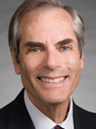
Rabbi Stephen Fuchs is the president of the World Union for Progressive Judaism (www.wupj.org). He recently visited several Bay Area synagogues.
From Feb. 7-18, Rabbi Stephen Fuchs spoke at Congregations Sherith Israel and Sha’ar Zahav in San Francisco, Peninsula Temple Beth El in San Mateo, Congregation Shir Hadash in Los Gatos, Temple Sinai in Oakland, Congregation Beth Am in Los Altos Hills and Temple Isaiah in Lafayette.