
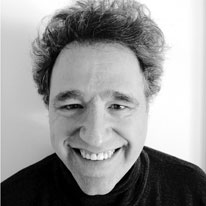
Barney Frank’s talk of retirement was anything but retiring.
The veteran Jewish representative’s announcement Nov. 28 that he would not seek re-election was replete with the same caliber of verbal bombs — lobbed and received — that characterized much of his career.
Frank, a Massachusetts Democrat, attributed his decision not to run in 2012 in part on what he said was the Republican polarization of the legislative process.
The House GOP caucus “consists half of people who think like Michele Bachmann and half of people who are afraid of losing a primary to people who think like Michele Bachmann,” he said at his news conference, referring to the GOP presidential hopeful and conservative Minnesota member of Congress.

“That leaves very little room to work things out,” said Frank, 71, who has served in the House of Representatives since 1981 and in 1987 became the first member of Congress to voluntarily come out as gay.
Frank also cited the redrawing of his district that made it more conservative as a reason for his decision.
His critics — among them a phalanx of Jewish conservatives — are not shedding tears over his impending departure. Some assailed his role in the financial crisis as chairman of the House Financial Services Committee from 2007 until January of this year.
“His most damaging legacies — the housing crisis, the financial ‘reform’ that bears his name, and the hyper-partisanship to which he eagerly contributed — outweigh Frank’s positive contributions,” wrote Joel Pollak on the conservative website Big Government.
At his news conference in Newton, Mass., where he lives, Frank pushed back against such claims, saying that much of the groundwork for the economic crisis was in place by January 2007. But Frank did say he had other regrets about his time in Congress.
Frank said he rued his vote against the first Persian Gulf War in 1991, as well as approving restrictions on the Internal Revenue Service that he now sees as impeding tax collection.
Jewish community professionals who dealt with Frank said that his ability to self-correct — the flip side of his acerbic wit and his unwillingness to suffer fools gladly — made him valuable: He was willing to be swayed by good arguments.
“Barney was willing to admit when he was wrong,” said Nancy Kaufman, CEO of the National Council of Jewish Women, who for years dealt with Frank in her previous job as director of Boston’s Jewish Community Relations Council.
Rabbi David Saperstein, who directs the Reform movement’s Religious Action Center, recalled a few hair-raising encounters with Frank.
“He could be scathing in his critique of your view,” he said. “It didn’t mean he was always right, but he would push you hard to defend your position. If you didn’t come really prepared, you’d find yourself in deep trouble. When you came prepared, he respected that.”
Frank was one of the few Jewish lawmakers who would push back against what he saw as the excesses of the pro-Israel lobby.
At the 2004 Democratic National Convention in Washington, he attended AIPAC’s “breakfast with mishpocha” — a get-together with the unofficial Jewish congressional caucus.
According to attendees, AIPAC’s then president, Bernice Manocherian, pressed Democrats in the room on how the lobby could better make its case to the left — a constituency with which Manocherian was concerned that Israel was losing ground.
The lawmakers politely demurred, insisting AIPAC was doing fine — until Frank spoke up and blasted the lobby for insisting that Jewish lawmakers back bills to which they might otherwise object. He cited a Republican funding bill from the late 1990s that slashed funds to Africa; AIPAC had insisted on passage because of its Israel funding components.
Slowly, as the other lawmakers saw Manocherian nodding and taking notes, they joined in, backing up Frank’s complaint.
In 2008 and 2010, Frank accepted the endorsement of the dovish J Street’s political action committee.
Frank did not often invoke his Jewishness, although he reveled in pushing back against Israel critics by noting that the Jewish state had been more advanced than the United States for years when it came to gay rights.
More recently he took up the cause of clemency for Jonathan Pollard, the Israeli spy serving a life sentence since 1985.
“Last year, Congressman Frank played a vital role in spearheading a key Congressional letter to President Obama which called for a commutation of Jonathan’s sentence, and he has been a vocal supporter and an outspoken advocate for Jonathan’s release ever since,” Esther Pollard, Jonathan’s wife, said in a statement.
When Frank did bring up being Jewish, it was often as a witticism.
When a woman at a town hall meeting in 2009 called President Barack Obama’s health care proposals “Nazi policy,” he famously said, “I’m going to revert to my ethnic heritage and answer your question with a question: On what planet do you spend most of your time?”
“It’s a loss of a sense of humor” that will be keenly felt, said David A. Harris, president of the National Jewish Democratic Council. “A rapier wit.”