
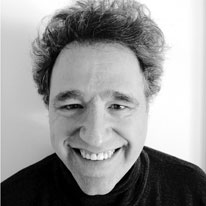
Rabbi David Saperstein runs through a list of superlatives to describe Elena Kagan — “self-evidently brilliant” and “steady, strategic and tactical” — before acknowledging that he doesn’t have much of a handle on what President Barack Obama’s nominee for the Supreme Court actually believes.
In the Jewish community, Saperstein apparently is not alone.

Community reaction to Obama’s selection of Kagan, the U.S. solicitor general, is enthusiastic until officials stop to consider what she stands for.
Kagan, 50, has never been a judge — she would be the first Supreme Court justice without bench experience since 1974. It’s a biography the White House touts as refreshing, but conveniently it also lacks a paper trail of opinions that could embarrass a nominee in Senate hearings.
“When someone’s a solicitor general, it is really difficult to know what is their own position and what is the position of the state they are charged to represent,” said Saperstein, head of the Reform movement’s Religious Action Center.
Kagan’s interlocutors in the Jewish community say the nominee is Jewish savvy, but she has not explicitly talked about her Jewishness since the nomination was announced May 10.
The first controversy to emerge has been Kagan’s defense, as Harvard University Law School dean, of the campus practice of banning military recruitment through the main career office because of the military’s discriminatory hiring policies on gays.
Kagan inherited the ban when she became dean in 2003, but she was not shy about agreeing with it. When the Bush administration threatened to withdraw funding in 2004, she rescinded the ban but wrote to the student body, according to the law blog Scotusblog, to say “how much I regret making this exception to our anti-discrimination policy. I believe the military’s discriminatory employment policy is deeply wrong — both unwise and unjust.”
Another debate pertains more closely to an issue that splits the Jewish community: federal funding for faith-based initiatives.
Kagan clerked for Thurgood Marshall in the late 1980s, and in a memorandum to the Supreme Court justice she said there was no place for such funding.
In Senate hearings last year for the solicitor general post, Kagan repudiated the position she had forcefully advanced in 1987. It was “the dumbest thing I ever read,” she said. “I was a 27-year-old pipsqueak and I was working for an 80-year-old giant in the law and a person who — let us be frank — had very strong jurisprudential and legal views.”
Though Saperstein found her defense troubling, the same was not true for the Orthodox Union’s Washington director, Nathan Diament. “As strong proponents of the ‘faith-based initiative’ and appropriate government support for the work of religious organizations, we at the Orthodox Union find Ms. Kagan’s review and revision of her views encouraging,” he wrote on his blog May 11.
Saperstein noted that the Religious Action Center, along with other Jewish civil liberties groups such as the Anti-Defamation League and the American Jewish Committee, are preparing questions for Kagan to be submitted to the Senate Judiciary Committee. RAC is soliciting questions from the public as well at www.AskElenaKagan.com.
These groups have welcomed the nomination; the National Council of Jewish Women has endorsed Kagan. NCJW President Nancy Ratzan cited Kagan’s affirmation of Roe v. Wade as established law protecting a woman’s right to an abortion, and her defense of federal campaign funding restrictions as solicitor general before the Supreme Court.
“She gave us clarity as a champion for civil rights,” Ratzan said. “We think she’s going to be a stellar justice.”
Those who have dealt with Kagan say she is affable, self-deprecating and brimming with confidence. She charmed her Senate interlocutors at her solicitor general confirmation hearings when she said her strengths include “the communications skills that have made me — I’m just going to say it — a famously excellent teacher.”
Richard Foltin, the AJC’s director of national and legislative affairs and a Harvard Law alumnus, was impressed by Kagan’s ability as dean of the school to bring conservatives and liberals together.
“This is an incredibly smart attorney who is able to reach out to people, take in diverse perspectives and bring people together,” said Foltin, who knew Kagan when she was the Clinton White House counsel on domestic policy.
Kagan, whose nomination is believed to be secure, would bring the number of Jews and women on the Supreme Court to three. That’s unprecedented in both cases. She would join Ruth Bader Ginsburg and Stephen Breyer as Jewish justices. Sonia Sotomayor, like Kagan a native New Yorker, is the third female justice.
Despite Kagan’s familiarity with the Jewish community, there are few clues as to her Jewish leanings. Her late father was on the board of West End Synagogue, a Reconstructionist synagogue in Man-hattan, where she grew up on the Upper West Side. She had a bat mitzvah at the synagogue and, according to a New York Times profile, argued with the rabbi — over what it’s not known.