
Rain pouring in Jerusalem, tears streaming down the faces of fans of Team USA, tremors shaking Chile — and always, always lunch at Eli’s, a kosher eatery in Washington, D.C.
You have entered the @Daroff tweet zone.
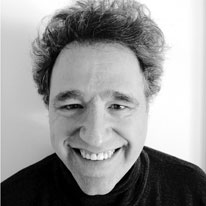
William Daroff, the Washington director of Jewish Federations of North America, has taken the organization that couldn’t get its initials straight and boiled it down to an engaging, entertaining and at times abrasive representation of the Jewish establishment in 140 characters or less.
Daroff’s career, always on an upswing, is now careening skyward.

Recent cuts at Jewish Federations mean that he is not only responsible for its redoubtable Washington lobby shop representing the combined needs of 157 federations, but also will be helping to direct its seminal rabbinical cabinet and its relief arm, and coordinate the alliance of 40 federations that come together to fund nine national groups.
But Daroff is best known for boiling down that alphabet soup into tweets followed by thousands. He has 2,205 followers on Twitter and 2,314 Facebook friends.
A sample just from Feb. 28 and March 1:
On a conference call with leaders of the #Jewish Federations of North America Rabbinic Cabinet
Palestinian Cabinet meets in Hebron, as means of protesting #Israel’s list of heritage sites http://bit.ly/a7FVj6 (@JPost)
RT @jbelmont: NBC says 25% of the men who’ve watched the Olympics have cried. As an American who’s lived in Canada, I just joined them.
Latest from Santiago #Chile: No damage to synagogues, damage to #Jewish cemetery walls, & broken windows at a community bldg.
RT @KevinFlowerCNN: tensions in Jerusalem over al-Aqsa simmering down—pouring rain has helped
The question some Daroff watchers, in the corridors of Jewish power and in other settings, are asking: Does the tweeting enhance or detract from the federations’ message?
“I see social networking and Facebook and Twitter as a new and novel way to communicate with the world generally and with the Jewish community more specifically,” said Daroff, 41. “When it comes to communications, not everyone we want to communicate with reads the JTA, Jewish newspapers or listens to rabbis and their sermons. It’s incumbent upon us to push forward the relevance of what we do as professionals and as a Jewish community, to meet people where they stand.”
Some welcome the tweeting as necessary in an age of instantaneous information.
“I’d rather he tweeted too much than not enough because he often has vital information in his tweets,” said Rabbi Levi Shemtov, who directs American Friends of Lubavitch. “I oftentimes learn about events and initiatives for the first time from William’s tweets.”
Others say the tweets reduce the complex back and forth of a conversation to an unrepresentative sound bite.
This tweet came out of Daroff’s attendance at the annual plenum of the Jewish Council for Public Affairs in Dallas last week: “At #JCPA, @ADL_National’s Abe Foxman calls @dailydish’s Andrew Sullivan ‘an example of someone who is educated & an anti-Semite.’ ”
It infuriated Foxman.
“I give a speech of 22 minutes, there’s a series of questions, and this is what makes the news?” Foxman asked, referring to his talk on global anti-Semitism. “This is how he wants to get attention for the JCPA?”
Off the record, some government officials say Daroff’s real-time tweeting makes them nervous.
“I know this is going to be tweeted, so it’s on the record and I can’t say anything useful,” said one official, who asked not to be identified. “The ability to have a candid conversation is minimal.”
Daroff dismisses the concerns, saying he confines his tweets to what is already known. He has tweeted about attending White House meetings, which is a matter of record, but not about the contents of the meeting, which is not.
“I wouldn’t tweet anything I wouldn’t tell a reporter,” he said.
Other Jewish officials, off the record, say Daroff’s tweets have veered into dangerous territory. They note a passionate back and forth with J Street last year over its reluctance at the time to endorse Iran sanctions. Daroff said J Street “stands with the mullahs.”
J Street has since endorsed sanctions, and officials on both sides say they enjoy good relations.
Still, the exchange raised eyebrows.
“You can’t self-promote to that degree and not become a target,” said one official who otherwise thought Daroff was doing a good job.
Some friends say Daroff is addicted to his Blackberry. Frank Luntz, a Republican pollster, tore Daroff’s Blackberry from his hand and threw it into the audience during a panel at the Jewish Federations’ most recent general assembly, in November in Washington.
Friends say if they see him in a restaurant, they will send him a direct tweet to get his attention. After his Blackberry delivers the message, Daroff has been known to stand up to greet someone who’s been facing him across the room for half an hour.
Making himself heard has never been hard for Daroff. He was a longtime operative for the Republican Party, starting with the late Jack Kemp’s 1988 presidential bid and including a long stint as the deputy director of the Republican Jewish Coalition.
Some people fretted in 2005 when Daroff was named to his current post. Did a nonpartisan lobbying body really need a partisan — albeit one who was well liked, but who also was not above the well-aimed partisan gibe?
But Daroff quickly reached out to Democrats, and did his best to assure them that he would not be a partisan.
“If he’s overreached at all, it’s in reaching out to the left,” said one Democrat, singling out health care as an issue where Daroff has sided more with the Democrats.
And it appears Daroff is here to stay: He is rumored to be on the short list for the soon-to-be-available post of CEO at the Jewish Federation of Greater Washington.
His response to the rumors was short, even by tweeting standards: No comment.
A guide to Twitter-speak
tweet: a message of 140 characters or fewer that is posted by a user on their Twitter account.
@ : a “mention.” Precedes a Twitter username. Users can view their “mentions” via the Twitter Web site or third-party programs.
#: a “hashtag.” Creates a keyword for a topic, and is mostly used to denote events or groups.
RT: a “re-tweet.” Used to give credit when a Twitter user is copying a tweet previously made by another user.