

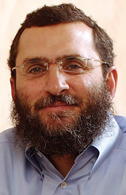
Recently I spoke to the Jewish community of Venice at the Chabad House there. Having just been to Haiti, I addressed the issue of why a good God allows the innocent to suffer.
I was amazed when an observant Jew approached me to say that the people of Haiti were not innocent, immersed as they are in idol worship.
“Surely you don’t mean to say that the morgue filled with the babies that I witnessed, the stench so bad that I was gagging, deserved to die? Or that the discarded bodies I saw being eaten by dogs deserved their fate?” I asked.

His response: The people of Haiti as a whole were being punished. A similar sentiment had been voiced by the Rev. Pat Robertson on “The 700 Club.”
I have always been puzzled as to why many religious people enjoy portraying God as executioner-in-chief and are always finding reasons to justify human suffering.
The Holocaust produced two camps of Jews. Many decided that the Jews had been punished for intermarriage and wanting to be secular.
But others had a much more Jewish response. They rejected any theological justification or self-blame and set to work even harder toward the creation of a Jewish state where Jews would find refuge and build an army to prevent another genocide.
The appropriate response to death is always life. And the Jewish response to suffering is to demand that God put an end to it.
So many people search for a reason why people suffer. They want to redeem tragedy by giving it meaning. Suffering ennobles the spirit, they say. It makes you more mature. It helps you focus on what’s important in life.
I would argue that suffering has no purpose, no redeeming qualities, and any attempts to infuse it with rich significance are deeply misguided.
Of course, suffering can lead ultimately to a positive outcome. The rich man who had contempt for the poor and suddenly loses his money can become more empathetic when he himself struggles. The arrogant executive who treats her subordinates like dirt can soften when she is told that she, God forbid, has breast cancer.
But does it have to come about this way? Is suffering the only way to learn goodness?
Jewish values maintain that there is no good that comes from suffering that could not have come through a more blessed means. Some people win the lottery and are so humbled that they dedicate a huge portion to charity. A rock star like Bono becomes rich and famous and consecrates his celebrity to the relief of poverty.
Yes, the Holocaust led directly to the creation of the State of Israel. But there are plenty of nations that came into existence without being preceded by gas chambers.
Here is another way that Jewish values are so strongly distinguished from other value systems. Many religions believe that suffering is redemptive. In Christianity, the suffering servant, the crucified Christ, brings atonement for the sins of mankind through his own torment. The message: No suffering, no redemption. Someone has to die so that the sins of mankind are erased.
Suffering is therefore extolled in the New Testament. Paul
even made suffering an obligation, encouraging the fledgling Christians to “share in suffering like a good soldier of Christ Jesus.”
But Judaism, in prophesying a perfect Messianic future where there is no death or pain, ultimately rejects the suffering-is-redemptive narrative. Suffering isn’t a blessing, it’s a curse.
Jews are obligated to alleviate all human misery. Suffering leaves you bitter rather than blessed, scarred rather than humble. Few endure suffering without serious and lasting trauma. Suffering leads to a tortured spirit and a pessimistic outlook. It scars our psyches and creates a cynical consciousness, devoid and bereft of hope.
Suffering causes us to dig out the insincerity in the hearts of our fellows and to be envious of other people’s happiness. If individuals do become better people as a result of their suffering, it is despite the fact that they suffered, not because of it. Ennoblement of character comes through triumph over suffering rather than its endurance.
Speak to Holocaust survivors like Elie Wiesel and ask them what they gathered from their suffering, aside from loneliness, heartbreak and outrage. To be sure, they also learned the value of life and the sublime quality of human companionship. Wiesel is an incredibly profound man. But these lessons, this depth, could easily have been learned through life-affirming experiences that do not leave all of one’s relatives as ash.
I believe that my parents’ divorce drove me to a deeper understanding of life and a greater embrace of religion. Yet I know people who have led completely privileged lives and have far deeper philosophies of life and are even more devoted to their religion than me. And they have the advantage of not being bitter, cynical or pessimistic the way I sometimes can be because of the pain of my early childhood.
Whatever good we as individuals, or the world in general, receive from suffering can be brought about in a painless, joyful manner. And it behooves people of faiths especially to once and for all cease justifying the death of innocents and instead rush to comfort and aid the survivors.
Rabbi Shmuley Boteach is the author of “Renewal: A Guide to the Values-Filled Life,” to be published in April. This piece previously appeared in the Jerusalem Post.