

As an Iranian American, I have been closely following the news regarding next week’s presidential election in Iran. And as a Jew, I have been particularly interested in how the June 12 election might impact Israel.
Two of the four candidates — including incumbent Mahmoud Ahmadinejad — are from the ultra-conservative wing of Iran’s regime, while the other two are from the so-called more moderate wing.

And whom do I want to win? Which of the four candidates would be best for Israel? My answer might surprise you: Ahmadinejad.
Let me explain.
For starters, I was very happy four years ago when Ahmadinejad was elected to a four-year term over Ali Akbar Hasheim Rafsanjani. As someone who is more moderate, Rafsanjani would now be hiding the real intention and doctrine of the regime, which is denial of a Jewish state.
Even former Parliament Speaker Mehdi Karroubi (and current presidential candidate) agrees with me. “Ahmadinejad offered the greatest service to Israel by raising the Holocaust issue because the whole world stood to support Israel,” he was quoted as saying.
As a Jew who grew up in Iran and witnessed the Islamic Revolution of 1979, I am very familiar with the regime’s political system.
Therefore, it really bothers me that today’s media give so much credence to Ahmadinejad — going on and on about his power, calling him the leader, etc.
While it’s true that the president of Iran is the republic’s highest elected official, the Iranian president does not have what leaders in many other countries do: full control over foreign policy, the armed forces or nuclear policy.
All are under the control of the Supreme Leader — which since 1989 has been Ayatollah Ali Khamenei — and no matter who is elected president June 12, there will not be any change in Iran’s foreign policy or nuclear ambition.
No matter who is elected, the Islamic regime’s stance against Israel will not change. Hostility toward Israel will not change.
What Ahmadinejad has been saying is the repetition of what the Ayatollah Khomeini, the leader of the Islamic Revolution, said 30 years ago and repeated until his death in 1988. His view of Israel was that “this is a cancerous tumor that needs to be removed from the Middle East.”
It is true that Ahmadinejad has been emphasizing this issue, but he is simply being honest in expressing the Islamic regime’s real view of Israel. Ahmadinejad is not as stupid as one may think. He is educated and he knows that the Holocaust happened; the only reason he is denying it is to irritate the Jews, and so he can blame the Palestinians’ plight on post-Holocaust sympathies.
Past presidents, such as Mohammad Khatami, a moderate cleric, tried to show a false image of what the regime in Iran stands for. During his presidency from 1997 to 2005, Iran was pursuing nuclear enrichment, including the ambition to have the atomic bomb. But other than the United States and Israel, no other countries were worried about it — until Ahmadinejad became president and started up with his anti-Israel rhetoric.
In this regard, Ahmadinejad is the best thing that has happened to Israel. He showed the true face of the regime.
Ahmadinejad’s opponents next week are Mohsen Rezaei (a former Iranian Revolutionary Guards chief), Mir-Hossein Mousavi (Iran’s former prime minister) and Karroubi. Ahmadinejad and Rezaei are from the ultra-conservative wing of the regime, while the other two are on the more moderate side.
In a poll last week conducted in Iran’s 10 biggest cities by Iran’s Press TV, Mousavi (38 percent) and Ahmadinejad (34 percent) were the frontrunners, reversing a four-point lead held by Ahmadinejad a week earlier.
Mousavi, billed by some as a reformist candidate, claims he has more moderate views than Ahmadinejad in regard to foreign policy and political freedoms. He has even slammed Ahmadinejad for waging a fierce rhetorical battle with the international community, leaving Iran with few allies. Karroubi has taken a similar, though not identical, stance.
Rezaei, on the other hand, has been directly involved in the planning and execution of some of the biggest terrorist acts committed by Iran’s clerical regime, including the bombing of the Jewish community center in Buenos Aires in 1994 that killed 86 people.
The regime’s hand is already wrapped tightly around the neck of the presidential race. Even before someone can become a candidate, he must undergo a rigorous approval process by the Council of Guardians, which routinely disqualifies reform-minded candidates and and/or those it deems not dedicated enough to fundamentalist Islamic values. This year, the regime’s hand-picked, 12-member council approved only four of more than 400 potential candidates.
And as for next week’s vote?
A more moderate president may not be too loud about the regime’s hostility toward Israel. But make no mistake about it: Whoever the new president is, he will follow Khomeini’s doctrine — which is to not recognize Israel as a Jewish state — and support Hamas, Hezbollah and pursuing nuclear ambition.
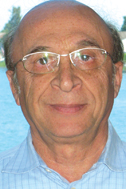
Yousef Moradzadeh is an Iranian American Jew who escaped Iran five years after the 1979 Iranian Revolution. He is a member of Temple Beth Jacob in Redwood City and the president of his own engineering consulting firm.