
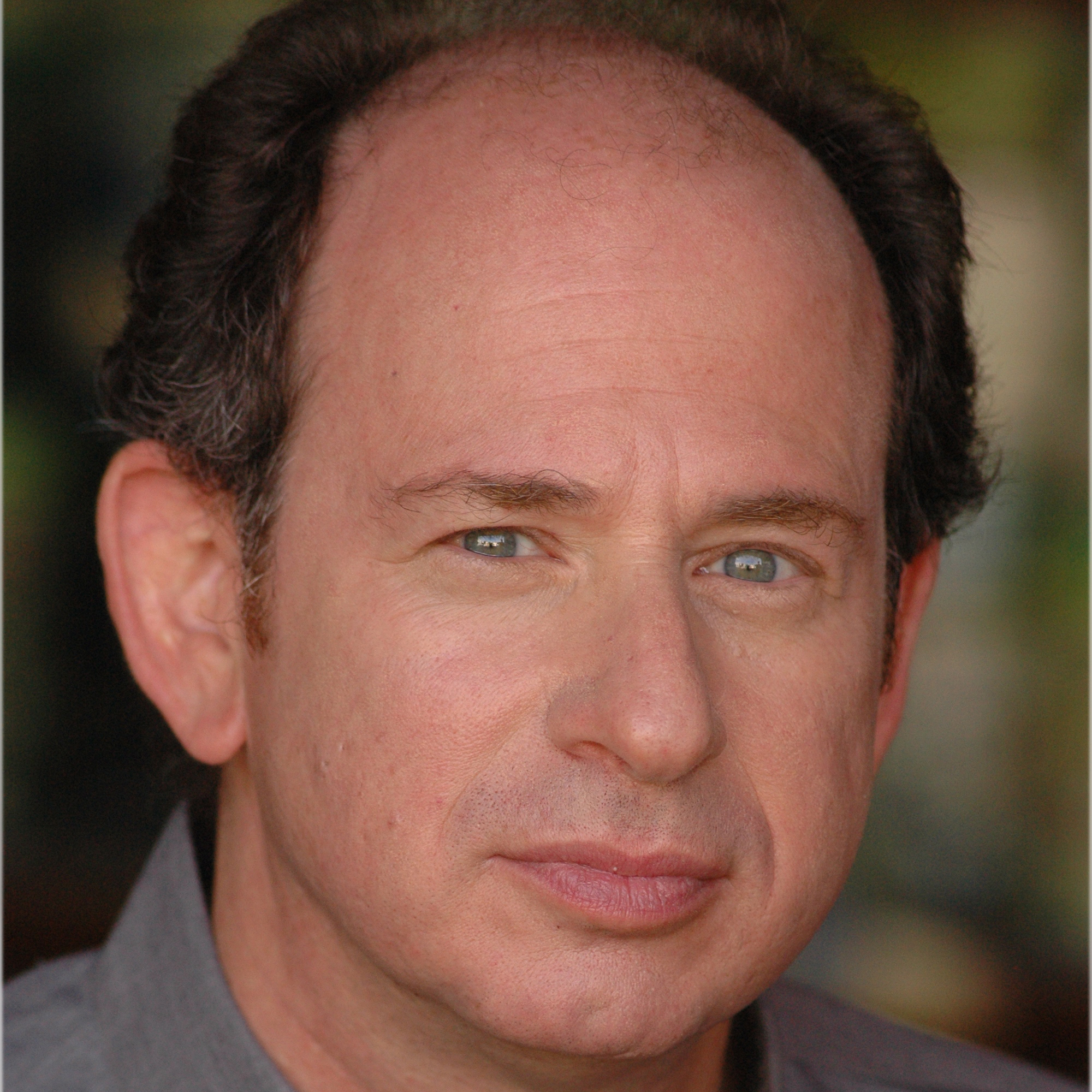
In the extraordinary first-person documentary “Mr. Cortisone, Happy Days,” Shlomo Shir realizes that — like everyone struck by a serious illness — he’s battling it alone. His weapon, and a powerful one at that, is a small video camera.
The fictional Emanuel Goldfarb is, to paraphrase Paul Simon, the only living Jew in Hamburg. Alone in his apartment in “Just an Ordinary Jew,” and set off by an invitation to talk about his experience at a public school, he spends a long, solitary night venting his tortured soul.
These portraits in isolation — the former a stunning record of a life-and-death struggle, the latter an existential exercise in semantics and theatrics — offer arguably the most intense viewing experiences in this year’s San Francisco Jewish Film Festival. “Mr. Cortisone, Happy Days” is co-presented by the Bay Area Jewish Healing Center. “Just an Ordinary Jew” is co-presented by the Anti-Defamation League-Central Pacific Region and Temple Isaiah of Lafayette.
“Mr. Cortisone, Happy Days” begins with Shir, a burly Israeli in his late 20s, packing to go to the hospital for a radioactive iodine treatment. His wife is pregnant, his dog will miss him — all in all, it’s a pain in the tuchus.
But his spirits are good, and he keeps his sense of humor. He reads Hamlet’s soliloquy and chooses “to be.” That simple declaration, along with state-of-the-art medicine, should vanquish the cancer.
It does, for a while. But eventually Shir has to go to New York’s Mount Sinai Hospital for an operation, which is when things get really weird and difficult. Through it all, Shir keeps his camera running, recording his frustration, defiance and fear. “Remedy to my life, a filter to my soul” is how he describes the little machine, and it is his lifeline to sanity.
The most remarkable aspect of “Mr. Cortisone, Happy Days” is Shir’s lack of self-indulgence (when he’s not under the influence of the painkillers, that is). Although the camera is his way to retain some control when he has none, over his disease or his treatment, the movie is not a record of his ego but of his humanity.
“Mr. Cortisone, Happy Days,” completed in 2004 but only now receiving its U.S. premiere at the festival, is a flat-out stunning work of art. Its natural point of reference, incidentally, isn’t “Sicko” — Shir gets top-quality care, even in the U.S. — but “Silverlake Life,” the landmark 1993 documentary made by a gay couple with AIDS.
Co-director Duki Dror (his “My Fantasia” screened two years ago at the fest, and last year he brought “The Journey of Van Nguyen” to the S.F. International Asian American Film Festival) will be present at the screenings. He’ll also present a sneak preview of his latest documentary, “Sidewalk,” at 11:30 a.m. Sunday, July 29 at the Roda Theatre in Berkeley.
The one-man show “Just an Ordinary Jew” can’t possibly match the real-life drama of “Mr. Cortisone,” even with anecdotes and incidents from a century of Jewish, German and Israeli history woven into its narrative.
Emanuel Goldfarb is a successful cultural critic, the son of Holocaust survivors and an assimilated Jew with the requisite non-Jewish ex-wife. His night-long monologue takes the form of a response to the well-meaning fool who invited him to speak, but the content is a personal excavation of his guilt, ambivalence and failure.
The piece, based on the novel by Swiss writer Charles Lewinsky and directed by Oliver Hirschbiegel (“Downfall”), is intended as a dissection of the painful relationship between German Jews and non-Jewish Germans. But one certainly doesn’t have to be German to relate to Goldfarb’s complex mix of emotions as the only child of survivors, or the dispute that doomed his interfaith marriage.
While these are valuable sections, the rest of the film plays as a glib collection of clichés for the viewer who’s steeped in movies, magazine articles and other media covering the same ground. Moviegoers who have not been overexposed to the messy German-Jewish issue will find “Just an Ordinary Jew” a veritable greatest-hits collection of postwar touchstones.
Ben Becker, who’s the whole show as Goldfarb, looks like a younger William Hurt — which is to say, not very Jewish. Furthermore, the artificial conceit of Goldfarb coming to terms with his identity all by his lonesome is a bit much for any actor to punch through.
That said, Becker largely gives a convincing performance, never more so than when he demonstrates an admirable facility with tefillin. Like the film itself, his efforts are worthy, but not scintillating.
“Mr. Cortisone, Happy Days” screens 3:15 p.m. Thursday, July 26 at the Castro Theatre; 1:45 p.m. Sunday, July 29 at the Roda Theatre in Berkeley; and 2:15 p.m. Tuesday, July 31 at the Aquarius in Palo Alto.
“Just an Ordinary Jew” screens 4 p.m. Tuesday, July 24 at the Castro Theatre; 2:30 p.m. Saturday, July 28 at the Aquarius in Palo Alto; and 4:30 p.m. Wednesday, Aug. 1 at the Roda Theatre in Berkeley. Tickets: (925) 275-9490 or www.sfjff.org.
Festival screenings For a complete listing of San Francisco Film Festival screenings and events, visit www.sfjff.org.