
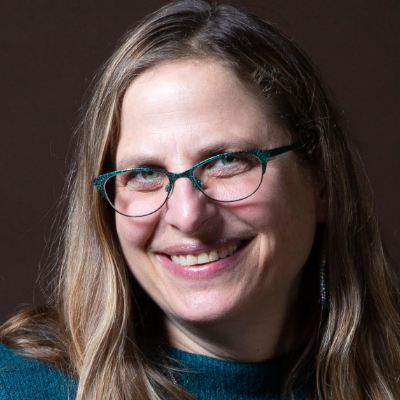
When asked about the likelihood of civil war when Israel withdraws from the Gaza Strip this summer, Ami Ayalon said he would rather call it a “battle between brothers.”
“We shall not have civil war, but we might see some violence,” he said recently during a visit to San Francisco.
Ayalon spoke at the Jewish Community Center San Francisco and Stanford University, and he was brought by the Israel Center of the S.F.-based Jewish Community Foundation.
Ayalon is a former director of the Shin Bet, the Israeli security agency. He has spent most of his career in the military and security. But in 2003, he reinvented himself as a peacenik, by teaming up with Palestinian intellectual Said Nusseibeh, to draft what they called “The People’s Voice,” a document that envisions a two-state solution to the Israeli-Palestinian conflict, based on basic principles.
While the word “peace” does not appear in the document, the plan outlines a world (with Palestine demilitarized) in which Jerusalem is the capital of both countries, with Palestinians in charge of their holy sites and Jews in charge of theirs. The borders of the two states resemble the 1967 lines, with a few territorial exchanges, plus a passage from the West Bank to the Gaza Strip.
The plan states: “Recognizing the suffering and the plight of the Palestinian refugees, the international community, Israel, and the Palestinian State will initiate and contribute to an international fund to compensate them.”
Ayalon and Nusseibeh collected signatures from civilians on both sides — 253,770 Israelis and 161,000 Palestinians have signed to date — to show that most people are in favor of such an agreement. Like the Geneva Accords, the People’s Voice campaign showed the Israeli public that there was indeed a partner to talk to on the Palestinian side, but because both of these initiatives were carried out independently of the government, they were not implemented.
And then news coverage stopped, “because this is not very sexy,” Ayalon said.
With the disengagement only months away, Ayalon felt it was time to push the idea of the People’s Voice anew.
But while Ayalon positions himself as a peacenik, he does not use the word, and in fact, has differentiated himself from the Israeli left by sharply criticizing its leadership for their lack of concern for the settlers.
He believes the settlers’ reaction to disengagement is perfectly understandable. “We send them to create settlements, and then, suddenly, one day, we tell them to come back,” he said.
Prime Minister Ariel Sharon apologizing to them and saying he feels their pain is not enough, Ayalon said. “In order to open this debate, we have to deal with the other things, like what will be the relationship between us and them?”
Ayalon said that he believed that when the time came, the majority of settlers would leave as told. “But there are some we should talk to who do not accept our vision. We do not want to see violence against us. For us, the people of Israel are more important than the land of Israel.”
He spoke of the difficulties of living in a democracy when some of its citizens believe that a rabbi is a higher authority than the Supreme Court.
“This is why democracy is existential for us,” he said.
“Living in a democracy is to agree on the rules of the game, but when our prime minister was murdered, that crossed a line. Most people understood that line should not be crossed.”
That Sharon lives under the threat of being assassinated is “sad, but a fact of life,” he said, adding that President Bush has no fewer bodyguards.
Ayalon said that slowly, more and more Israeli politicians are getting on board with the People’s Voice initiative. “Success will be a situation in which all of the Israeli left will accept its principles,” he said.
The Labor Party has accepted it, he said, as has the majority of the Shinui Party. Even about 40 percent of Likud Knesset members have accepted it, he said, and six to seven members of the Shas Party.
He concluded, “We really don’t care how history will be written as long as more people in the political community accept our ideas.”