
Rosemary, lavender, salvia, sage … These commonplace Northern California plants are a lazy gardener’s best friend: Drought-tolerant and deer-resistant, these fragrant perennials need little in the way of TLC, yet they produce colorful blossoms unfailingly throughout the year.
And they certainly withstand the test of time. After all, these garden stalwarts — plus many, many others that typically populate Bay Area landscapes — are
biblical plants. Their roots go way back through the centuries. Just read the Bible.
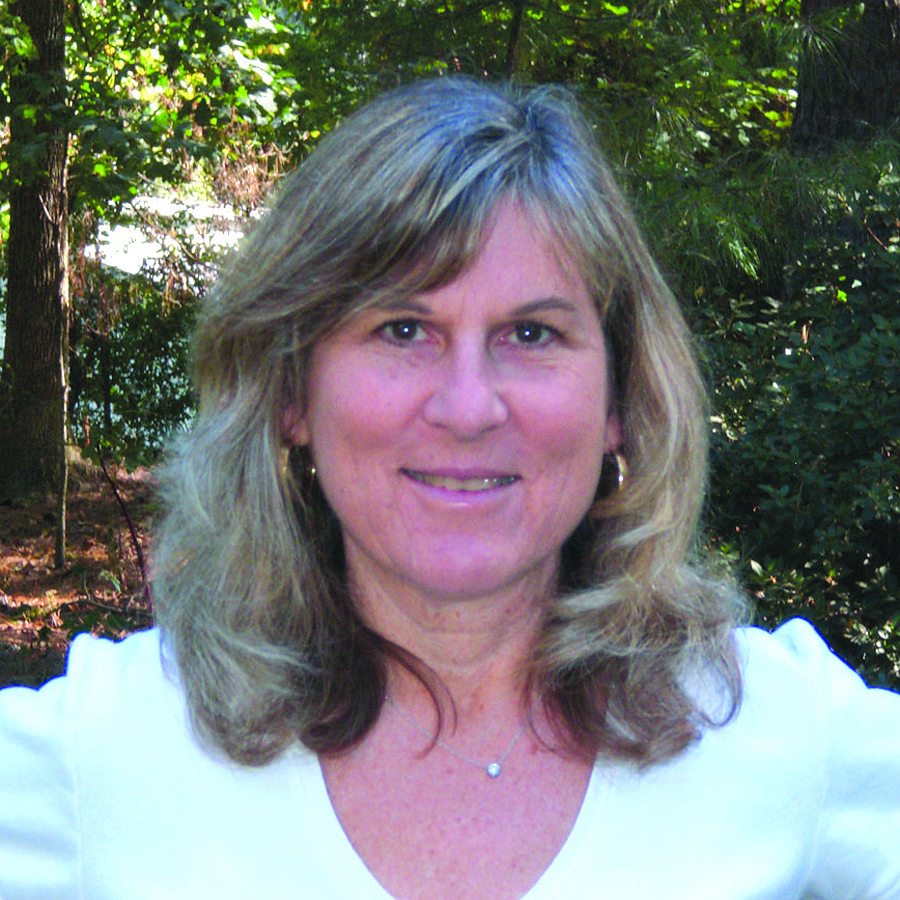
It was during her first visit to Israel about a dozen years ago that Walnut Creek hobbyist-gardener Shirley Pinchev Sidell first considered the notion of a “biblical garden.” She and her husband, Sheldon, a doctor, were among a physicians’ group on an informational and sightseeing tour. One of their stops was a medicinal garden.
“I was told that certain plants had been considered medicinal for thousands of years, and some were mentioned in the Bible,” she recalls, “and I thought, that’s intriguing … a biblical garden.”
Also interesting, she says: “The plants that we saw there were the same ones that I have growing in Walnut Creek.”
It quickly became apparent to her traveling companions that Sidell knew more about plants than their tour-group guide, and she became the “go-to” person for plant-related questions. That just whet her appetite to learn more.
After returning home, Sidell delved deeper and wider into the topic of biblical plants. She scoured the Internet to learn more about biblical gardens and, to her amazement, “There was nothing there!” So she researched the old-fashioned way, using books. Slowly, she accumulated multiple resources and living authorities.
She did this in addition to her day job, which involves a lot of database research, and her volunteer involvement with Congregation B’nai Shalom in Walnut Creek, where she has served as chair of the landscape committee since 1994.
Gradually, ideas began to percolate, she recently explained. One was to spearhead the planting of a biblical garden at the Conservative synagogue. “I’ve always had the theory that Jewish food is important because it’s another [way] of learning about Judaism. And it dawned on me, if we could teach children — and actually have them grow and see and eat these plants — this would make the Bible ‘real’ for them.”
So a biblical garden was born, replete with plant ID tags, including botanical and scriptural references. Spread throughout the congregation’s 7.5 acre hilltop campus are minigardens with plants large and small: giant ferns, liquidambar, grape vines, fig trees, salvia, olive trees and many others of ancient origin. The garden was officially dedicated in February 2002.
On special occasions, such as Tu B’Shevat, the children receive seed packets, so they can start their own biblical gardens at home..
B’nai Shalom’s is not the only Bay Area biblical garden. There’s a handsome one at St. Bonaventure Catholic Church in Concord, and another in San Francisco’s Golden Gate Park.
To the south, the Church of the Wayfarer in Carmel has a very old, lush biblical garden: “We call it a mature garden,” says Sidell.
Israel boasts Noet Kedumim, a sprawling biblical garden where trees, shrubs, flowers and herbs can be found: acacia, cypress, Jerusalem sage, pink rockrose, Sharon tulip and narcissus, to name just a few. However, “they’re having a terrible, terrible time” financially, Sidell is quick to note, because of the fall-off in tourism since the intifada.
As for the dearth of information on the Internet, that’s been taken care of. Over the years Sidell has used her database research skills, and chutzpah, to get a Web site and organization up and running: www.biblicalgardens.org. She’s recruited a well-respected board of directors, including British author Nigel Hepper (“How to Plant a Bible Garden”), her congregational rabbi, Gordon Freeman, and garden writer Vincenzina Krymow.
The site is a wellspring of information and, with color photos and virtual tours, a feast for the eyes. Part of its mission is to provide free seed packets to individuals and groups. The site gets 30,000 to 50,000 hits a month, according to Sidell. Its popularity still amazes her.
“Everybody is interested in this,” she says — from gardening enthusiasts to those interested in the Bible and Koran. “People just seem to be intrigued.” (Interestingly, within the religious spectrum, the Jewish community seems to fall just about at the bottom of those interested, Sidell has found.) “Everybody thinks that I’m Christian, that it’s a Christian-connected thing,” she adds with a laugh.
In truth, the study of biblical gardens has enhanced her Judaism. “I hadn’t done much Bible reading – we went to a very, very Reform temple in Seattle,” where she grew up. “I thought the Bible was fiction.
“But as we were driving in Israel, I was beginning to think, ‘maybe some of this is real.’ And after that, it was sort of an epiphany: ‘Gee, it’s not just fiction.'”