
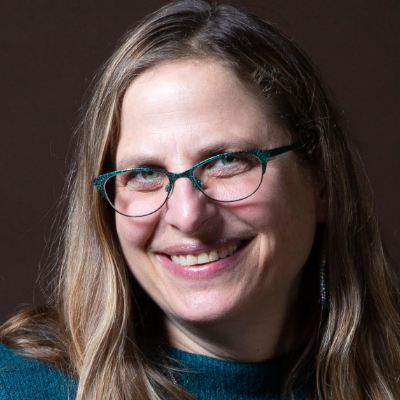
Ask Ami Nahshon what is one of the most critical issues facing Israel today, and he’ll answer the relationship between its Jewish and Arab citizens.
His convictions about this are so strong that, after 18 years, he’s leaving the Jewish Community Federation of the Greater East Bay, to work on the issue full time.
“One of my major objectives is to raise the visibility of the issue in the federation world,” said the executive vice president of the federation.
In June, Nahshon and his wife, Ivy Cohen, are moving to New York City, where he will become CEO and president of the Abraham Fund, an organization that supports Jewish-Arab coexistence projects in Israel.
When the fund “reached out to me in the fall of 2002, their invitation struck a chord deep inside me that compelled me to pay attention in a way I hadn’t before,” he said. “I’ve always believed that the relationship between Jews and Arabs in Israel and that advancing the cause of social equality within Israel are under-appreciated and incredibly important elements of Israel’s future.”
Only a handful of federations around the country are allocating funds to promote coexistence despite the ongoing intifada — although the S.F.-based Jewish Community Federation had led the way back in 1985, and the East Bay federation began doing so in 1999.
Nahshon said he had closely followed the work of the Abraham Fund since its inception 12 years ago, and was impressed with its track record.
“One of the things that appealed to me is its nonpartisan character,” said Nahshon. “The right understands that it’s in the best interest for Israel to have a happy minority, and the left comes to it from a more idealistic place.
“This is an opportunity to work in an area that I’m deeply passionate about and that would give me the chance to work both in the United States and in Israel.”
A search for Nahshon’s successor in the East Bay is under way, and the federation hopes to have a new executive installed by the High Holy Days.
Nahshon wasn’t looking to leave his job, though he admitted he always felt that at some point, he would do something else. And while a variety of opportunities have presented themselves over the years, the offer from the Abraham Fund was the one that stood out.
For the 54-year-old, who has spent all but six years of his career working in the Jewish community, it is “an opportunity to live out my values in my professional life” — though he added, it’s not as if he wasn’t doing that before. Among his accomplishments he counts expanding federation’s funding priorities in Israel to include coexistence projects, beginning in 1999, as well as working with other organizations that focus on Israel’s minorities.
With a staff of eight in New York and 12 in Jerusalem, plus an Israeli advisory board of even more participants, Nahshon said he’ll be traveling to Israel as often as every six weeks.
While the issue of coexistence has long been on the Israeli agenda, Nahshon believes that now, more than ever, relations with the million-strong Arab minority need to be pushed to the front burner.
Just as the urban riots in the 1960s served as a wake-up call to white America, Nahshon said events of October 2000 did the same for Israeli Jews.
That was when 13 Arab citizens of Israel were killed by Israeli police when they marched to show solidarity with the Palestinians during the outbreak of the second intifada.
“The path of confrontation and polarization is a path that neither community can afford,” said Nahshon. “In the short term, it’s been very difficult and damaging to the cause of coexistence, but in the long term, I think it will have helped elevate the issue and impress on Israelis and American Jewish leadership how critical this work is.”
Obviously, Nahshon has his work cut out for him. Almost three years of violence has hardened the hearts of many American Jewish philanthropists, who are less likely to fund coexistence projects now, when they feel that Israel is fighting for its very survival.
But Nahshon believes strongly that coexistence is one of the most important issues on the Israeli agenda today, thanks, in large part, to the work of the Abraham Fund.
“Today there are hundreds of grassroots organizations working on coexistence,” he said. “Polls show that very substantial numbers of Israelis believe that it’s one of the most important issues facing Israel. This is not a fringe movement; this is not a radical concept. It’s a very centrist concept today.”
Nahshon noted that coexistence was valued by the early Zionists, both right-wing and left-wing alike, such as Zev Jabotinsky and Henrietta Szold. Nonetheless, he acknowledged that getting more mainstream American Jews to open their wallets to support the Abraham Fund’s work could be challenging.
“The reason American Jewish donors should support this is because they care about the welfare and future of the state of Israel,” he said. “Contributing to initiatives that defuse tension and help raise the level of investment of all Israelis in the future and in creating a civil society in Israel is very much in the interest of Jews who care about Israel. Investing in coexistence is, in my view, a fundamental expression of Zionist ideology.”
Among his goals is to at least double the Abraham Fund’s annual budget of $4 million. But at the same time, he said his new position is not only about fund-raising.
“Fund-raising is how we pay the bills, but what we are about is social change, cultural change and political change,” he said. “They hired me because change is what I do.”
Articulating a new strategy for raising the fund’s visibility in both Israel and America is among his highest priorities. Using technology to increase cooperation between the staff of the Jerusalem and New York offices is another.
While Nahshon believes that coexistence is hardly a fringe movement in Israel, he also knows that there is much work to be done. “What is now a minority movement, I hope five years from now will be a mainstream, majority movement,” he said.
His goals may be lofty, but he certainly accomplished a lot during his tenure here.
“My greatest personal satisfaction has been to shepherd the development of Jewish education and Israel programs for young people,” he said. “We have built a network of teen education that is the envy of many communities around the country.”
For a community of approximately 25,000 Jewish families to have 1,000 teens studying in the East Bay Midrashot, the federation’s high school program, is a huge accomplishment, he said.
Nahshon might also be remembered here as a fund-raiser, though he would argue his job consisted of a lot more than that. When he first became assistant director of the East Bay federation, it had raised $2.5 million in its annual campaign the year prior.
Two years later, Nahshon became executive vice president, and now, he’s leaving behind an organization that raised a total of $14 million last year, in several combined campaigns.
He also listed the high numbers of teens and college students that the federation sent to Israel each summer, until the second intifada broke out in September 2000.
Amy Friedkin, the current national president of AIPAC, the pro-Israel lobby, began her Jewish activism in the East Bay federation, serving as president from 1987 to 1989. She said the federation is known nationally for the highest quality educational and Israel programs.
“Ami nudged us very early on for this,” Friedkin recalled. Calling him a “great communicator” as well as a highly inspirational speaker, she said, “I can remember back before I was president, we talked about establishing an Israel Center. We were looking to do one Bay Area-wide, and no one else was interested. The East Bay opened the first-ever Israel Center. I think that speaks volumes about where Israel fits in in our mission of the federation.”
Yossi Amrani agreed. “Ami impressed me with his commitment to Jewish life and his total devotion to Israel,” said the S.F.-based consul general of Israel. Calling him a mensch, Amrani said, “His heart, mouth and mind are in the right place.”
Through the federation’s 5-year-old Volunteer Action Center, thousands of volunteers have been placed in both the Jewish and non-Jewish communities. And through its newer mentoring program, Jewish entrepreneurs are being matched up with minority, first-time small business owners in the larger community.
“I believe we need to pay increasing attention to the quality of life in the community around us,” said Nahshon, “and look for ways to share the good fortune that we’ve enjoyed as Jews in America with other communities that continue to struggle.”
Though he is excited about his new position, Nahshon sounded a bit wistful about leaving the East Bay. “My wife and I love this community in a way that makes it difficult to think about doing something else,” he said.
The feeling is mutual, since it seems Nahshon will be missed by many in the East Bay Jewish community.
“Ami put this federation at the cutting edge of changes in the federation world,” said Jerry Yanowitz, the federation president from 1997 to 1999.
“He grew up in this community and this community grew up with him,” said Marjorie Wolf, current president of the federation. “He brought very special and unique qualities to us, in the area of leadership, community development and our relationship with Israel.”
Of his new position, Wolf said, “We’ll miss him very much but we feel he’s doing God’s work by taking on his new task and something good for the Jewish people as a whole.”
Nahshon would be first to agree. While he knows his ultimate goals are a long way off, he hopes they are perhaps closer than most would imagine.
“I dream about an Israel in which Moshe is just as likely to call Mahmoud for advice or partnership as he is likely to call his Jewish neighbor. I dream about Israel not needing an Abraham Fund anymore because it will have integrated all of its values and objectives in the day-to-day life of Israelis and Israeli institutions.”
He continued: “Ultimately, my dream is that the model of Jews and Arabs working and living together in Israel will be the springboard for a model of cooperation with its Arab neighbors,” he said. “Israeli Arabs can be a bridge and leaders to reaching out to other countries. It feels very far away today, but we at the Abraham Fund, like the state of Israel, are in it for the long term.”