
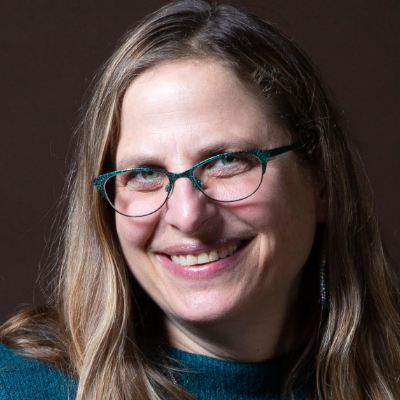
Adela Arriaga knows quite a bit about the Holocaust. And she teaches it in her ninth-grade world literature class at San Francisco’s Mission High School. But finding the materials to put it into context can be difficult.
“How do you make anything interesting to a 15-year-old? That’s always the challenge,” she said.
Arriaga was one of 200 Bay Area high school teachers who will be better equipped now to teach about the Holocaust, thanks to a three-day seminar hosted by the U.S. Holocaust Memorial Museum; the Graduate School of Education at U.C. Berkeley, where it was presented; and the Holocaust Center of Northern California.
Such seminars “are part of our national outreach program,” said Stephen Feinberg, director of national outreach and education for the Washington, D.C., museum, which has also conducted seminars in Los Angeles, San Diego and seven other states.
California is one of six states nationwide that requires teaching about the Shoah to high-schoolers. “There is great interest and demand for teaching this history here,” said Feinberg.
The program was not only for teachers but for those involved in teaching programs as well. The museum sent fliers to more than 1,000 teachers in the Bay Area, from public, private and parochial high schools as well as Jewish schools. “Most of the teachers are not Jewish,” said Feinberg. “The museum’s mandate is education for all schools, to teach its importance in history.”
Sessions included talks by survivors, educators and experts. Topics ranged from introducing new literary sources to researching the Holocaust online.
Krista Rogerson, a former teacher at Tennyson High School in Hayward, who is now getting a master’s degree in education, said though she taught Elie Wiesel’s “Night” every year, “I have huge holes in my historical knowledge.”
Rogerson spoke of the difficulties of teaching the subject in Hayward, where 40 percent of the students are not native English speakers, and only a minuscule percentage is Jewish, so she has to begin with what Judaism is.
“They may know nothing about World War II other than Hitler,” she said. “It’s not like the situation other teachers are in.” However, she said that most of her students are “blown away and really moved” by what they learn. Many compare the themes raised in Holocaust literature to those in Chicano literature.
“They always ask how is it possible that hate can go that far, and they try to get inside the heads of the perpetrators and the bystanders and those that resisted,” said Rogerson. “They learn that the small acts we choose and don’t choose to participate in can lead to something like this. They see what being passive or indifferent can lead to.”
Bonnie Sussman is what the museum calls a Mandel teaching fellow. The teacher at Oakland’s Bishop O’Dowd High School participated in a fellowship program for teachers several years ago, and like all the other fellows, is considered a resource person in the area for teachers to consult.
Sussman first got interested in the Holocaust while researching what happened to her ex-husband’s relatives, who were all killed in Lithuania, and it quickly became her passion. She went from introducing a semester-long course on the Holocaust at the Catholic school to teaching it both semesters, and she recently persuaded the administration to allow her to teach it during two periods both semesters.
Using literature, art, poetry and music, the students learn the history of anti-Semitism and they read Hitler’s diary, “Mein Kampf.”
At the end of the semester, the students can opt to take a test, or they can complete an original assignment of their choosing.
“I wish I could bring some of the paintings or poetry that the kids have brought in,” she said. “A test just says, ‘Yeah, I know the answer,’ but an original poem says, ‘I understand.’ They really make it a part of themselves. It’s much more important than just knowing a date.”
The teachers’ seminar was funded by the museum, a grant from Bank of America and Mathilde Albers of Oakland, who escaped Germany in 1939 but lost her entire immediate family.
“My motto and mission is that it won’t ever happen again,” said Albers. Noting that the best time to educate people is when they are children, she said, “I will do whatever is in my power to help that along. Just thinking about my family and the other 6 million is not good enough. We must honor their memory by either supporting the institutions or the organizations that deal with disseminating the facts about the Holocaust to the general public, because it’s too quickly forgotten.”
It was money well-spent, as was evident by the teachers.
Sussman said she knew she accomplished what she set out to, if her students object to racist or sexist comments when they hear one. Quoting Wiesel, she said, “The opposite of love isn’t hate. It’s indifference. And that’s my message, too.'”