
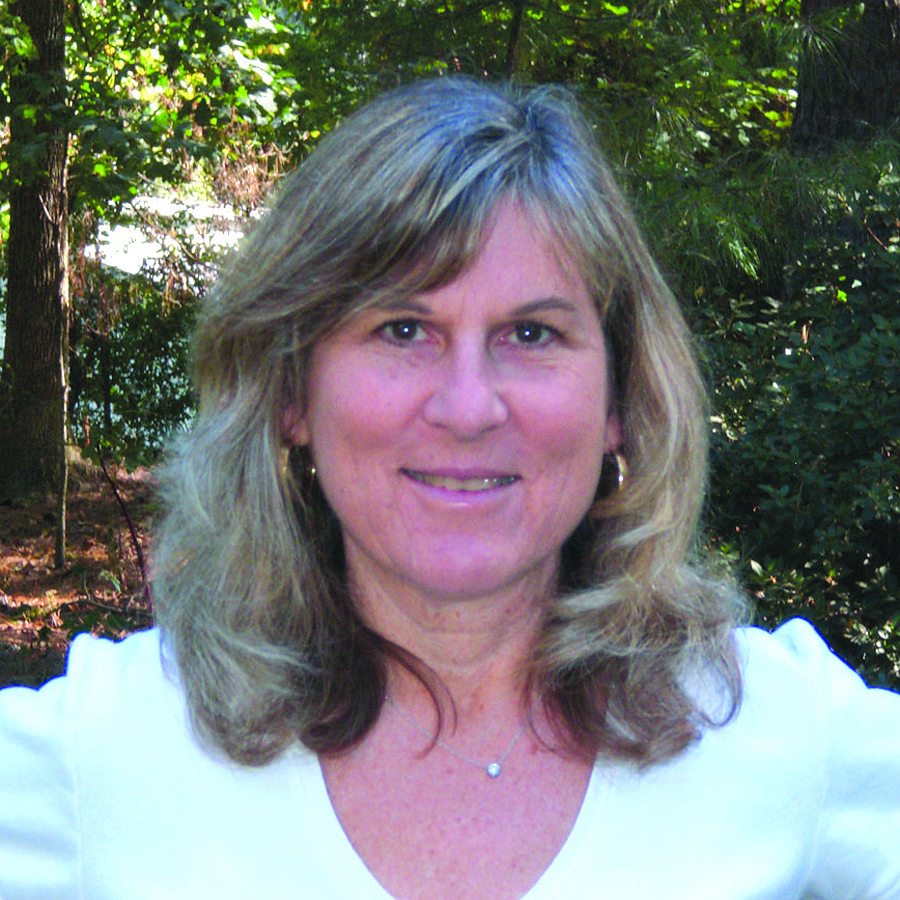
Women hold an abysmally small number of top leadership positions in the nation’s Jewish organizations — and change may be slow in coming. That overriding message rang loud and clear at “Women on Top,” a panel discussion held May 9 at the Marin Jewish Community Center in San Rafael.
State Sen. Jackie Speier (D-San Mateo), in preparing for her role as moderator in the final program of the “Women Who Shook the Jewish World” series at the JCC, uncovered a statistic that surprised her.
“Only 5 percent of the leadership of Jewish organizations in the United States is headed by women,” she said before introducing some of the most powerful women leading Bay Area Jewish community organizations.
Phyllis Cook, the executive director of the Jewish Community Endowment Fund of the S.F.-based Jewish Community Federation; Anita Friedman, executive director of Jewish Family and Children’s Services of San Francisco, the Peninsula, Marin and Sonoma Counties; and Maxine Epstein, director of the Marin region of the JCF, all agreed that the picture isn’t pretty.
Yet they held some hope that more women would break the glass ceiling, shattering the status quo. If not, they predicted, more Jewish women would leave the communal establishment, looking for opportunities elsewhere.
An audience of well more than 100 — mostly women — gave the speakers a lot of affirming applause, and many silent, “I-know-what-you-mean” nods of understanding.
Cook, under whose leadership the endowment fund has mushroomed from $27.4 million to more than $262 million, also serves as associate executive director of the JCF. She said the 19 biggest Jewish organizations in the United States have no women at the helm, nor do the country’s top 40 Jewish federations have anything to boast about, with only one woman executive director. In fact, she said, “gender inequality” is more prominent atop of federations than in other Jewish organizations. And yet organizations are filled with women employees and volunteers.
Though there are “women in the pipeline” and executive training programs, she continued, the women who do become chief executives “are selected from the outside,” rather than from within organizations.
On a practical level, Cook advised women to serve on boards, become officers of those boards, and get themselves on search committees for new executive directors. As for those who would like to hold leadership positions themselves, Cook said they will need focus and perseverance. “Ninety-eight percent of life is showing up, and endurance is everything,” she advised.
She warned that women leaders “are not always listened to” and that a cruel duality exists — like “a woman is ‘aggressive’ while a man is ‘firm.’ “As for some strategies for climbing to the summit, she conceded “you have to be lucky.”
But Cook also listed qualities that boost one’s chances, such as being “extra-competitive,” and having “sound financial skills” and fund-raising abilities. Also, “you have to have a personal life in balance — work cannot be your whole life,” said Cook, who did not join the workforce until her youngest child was in high school.
Epstein, who has twin 2-year-olds at home, challenged Jewish organizations “to examine a different paradigm — one that challenges the way we do business.” The old model of being on-call “24 and seven” just doesn’t work, she said. “It doesn’t promote or celebrate Jewish continuity. We need a family-affirming model.”
She asked, “How will the Jewish communal agenda ever change if women’s voices are not heard?” As long as the “gender issue” is not taken seriously, she said, women and the community “are losing out.”
Epstein did express pride in that the local federation, at least, “is funding arenas that have been largely ignored or marginalized by others.” She cited the Amuta, the Federation’s Israeli advisory group, which has eight Israeli Arabs on its board, and its new, gay and lesbian position — the first of its kind in the nation.
But the community as a whole does not stand up very well to secular nonprofit society. Epstein said 51 percent of secular foundations have women chief executive officers.
Friedman, a licensed social worker who earned her doctorate in organizational psychology, said she’d conducted her own study of the Conference of Presidents of Major American Jewish Organizations. Of 52 presidents, she said, 12 are women. And of those 12, seven head women’s groups such as Hadassah and ORT. Only one woman heads a major Jewish political organization: San Francisco resident Amy Friedkin, who is the new president of AIPAC.
There’s “almost a complete absence” of women at the apex of the Jewish political and institutional world, said Friedman, who heads one of the largest family service agencies in the country.
On the other hand, she found some cause for optimism: movement on the religious and cultural front. “Roles have shifted,” said Friedman. Women are gaining “equal access to religious and cultural activities.”
Yet, “there’s a very strange lack of cross-fertilization from one front to another.”
The gender imbalance in leadership is due to Judaism’s “patriarchal culture,” the speakers agreed. “We’re way beyond asking why this is true,” said Friedman.
But as a result of the lack of diversity, women’s issues (such as domestic abuse or childcare) do not receive priority for funding, and progressive women are seeing these institutions “as irrelevant, and finding new ways to become involved,” said Friedman.
“They’ll leave if they don’t feel there’s a pathway to equality.”
While all of the speakers expressed hope that more women will rise to the top of the American Jewish communal establishment, they also expressed some impatience.
“We need to imagine a community in which every person is equally valued,” said Friedman, who predicted “the next decade will be critical.
“We know what’s wrong and why, but we’re way past the ’60s and ’70s. The question is when… This discussion needs to be placed on the agenda of the organized Jewish community.”