
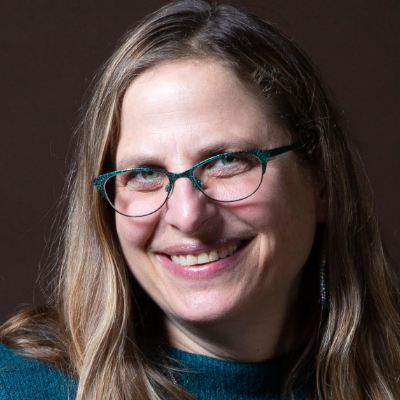
As devastating as the loss of life was in the terrorist attacks on the World Trade Center and Pentagon last month, the number of Israelis killed over the past year during the al-Aksa intifada has been just as deeply felt, said journalist Judy Lash Balint.
“Israel is very small, both physically and numerically,” she said. With at least 177 “deaths over the past year in our Jewish population of some 5 million, the impact is as deeply felt as with the 5- to 6,000 here.”
The British-born Balint was in San Francisco recently to talk about her new book, “Jerusalem Diaries: In Tense Times,” a volume of vignettes describing daily life in Israel.
Balint is the Israeli representative for the Coalition for Jewish Concerns-Amcha, after working for the U.S. arm of the organization for many years. She has long been involved in the Soviet Jewry issue and made aliyah in 1997, after living in both Seattle and New York.
Arriving in Israel “halfway through the Oslo process,” Balint said she soon “realized what people [abroad] didn’t know about day-to-day life in Jerusalem. I felt I could make some contribution and provide background to the headlines. It’s a very different thing to know and understand on a personal level how things were affecting people.”
As a journalist, Balint nonetheless has a specific agenda: she is openly sympathetic to the movement to keep the West Bank and Gaza in Israeli hands. Raised in a strong Zionist home, she is the daughter of two Holocaust survivors.
Balint opposed the peace process from the start. First of all, she said, Palestinian leader Yasser Arafat could never be trusted, as he “invented the concept of international hijacking.”
She recognized she was out of step with most of the Israeli public, noting that the “majority of Israelis understood the need for compromise to achieve peace. The intellectuals, the media and everything was geared to make us understand that.”
The problem, though, was that the Palestinians were not doing the same.
“Actually, the level of hatred and incitement was increasing on their side,” Balint said. “The writing was on the wall. There was no way Palestinian society was being channeled to accept the existence of Israel.”
Bringing it back to the present, in the years since Oslo and especially since the outbreak of the intifada, Balint is certain of her long-held beliefs: “Everyone recognizes that now.”
Balint has many friends who live in settlements in the West Bank and Gaza, and one of her motivations in writing her book was to describe to her readers what life is like there.
While Americans are likely to read such headlines as “Settler killed in drive-by shooting,” they don’t understand what it’s like “to be under siege, and what it’s like to go to funerals and see friends’ kids injured.”
When asked why settlers would endanger the lives of their children by living in such hostile territory, she said, “If we had no settlements in [the Gaza Strip’s] Gush Katif, those attacks would be in Ashkelon.”
Israel is surrounded by hostile neighbors, she said, “so if you take that argument to its logical conclusion, we’d say, ‘Let’s pack up.’ It’s not a Jewish response, not a moral response and not the correct response to people who threaten you with violence. The minute you cave in to that, it’s all over.”
Those who suggest that dismantling the settlements would solve the conflict are deluding themselves, she said. “They are losing site of the hatred of the presence of Jews in the Middle East.”
While this past year has been an unusually tense one in Israel, Balint said that since the terrorist attacks in America, Americans could learn a thing or two from Israelis.
On the one hand, she wonders how people “maintain the right level of consciousness and empathy, while on the other hand, not let it overflow your life?”
Answering her own questions, Balint noted Israelis have their own way of coping, such as reopening businesses in the vicinity of a bombing as soon as possible. “People are encouraged to come back, because you don’t want to play into the goals of terrorists.”
However, individual people have their own ways of coping, too: Not listening to the news is one; travel is another, or, in the case of religious people, praying and doing more acts of chesed (lovingkindness).
Nevertheless, she said, once-rare occurrences are quickly become the norm and taking a toll. For instance, nowadays, Balint barely registers the noise of the shooting in the Jewish neighborhood of Gilo about five minutes away.
“I hear the firing and then I go back to my TV program. On the one hand, you have to do that to maintain normalcy, but you also are saying, ‘How can you be doing that?'”
When Balint visited New York about two weeks after the Sept. 11 attacks, she read an editorial in the New York Times, encouraging readers, “Don’t abandon us”; come visit the city.
She was struck by its similarities to Israeli pleas.
“We’ve been crying this for the past year. Americans in particular are choosing to stay away from Israel at a time like this, and this is something Israelis really feel very deeply, especially now.”
Nonetheless, Balint ended on a positive Zionist note, saying that despite the tension, there was nowhere else she’d rather live.
“There is no other place to have a more meaningful Jewish life, where you feel your existence is meaningful and you’re contributing to Jewish history. The destiny of the Jewish people is not being written in the U.S.”