
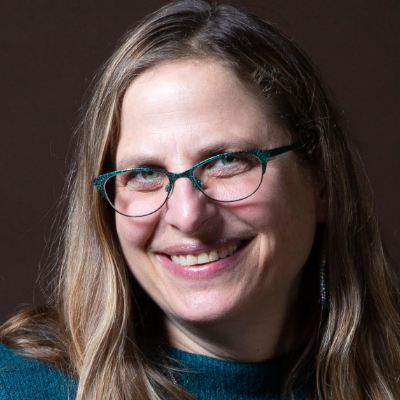
Adina Michael was thrilled when she got a phone call not too long ago about her ad seeking Hebrew and Jewish studies teachers.
The education director of Temple Beth Jacob in Redwood City had heard virtually nothing. Now, after several weeks, finally.
Alas. It was only a reporter, not a prospective teacher. Michael was audibly disappointed.
“It’s unfortunate, but it’s the reality,” she said, referring to the continual lack of qualified candidates to teach the Conservative synagogue’s children.
Listing other activities that potential teachers (i.e., Jewish 20- and 30-somethings) were more likely to be involved in, namely, computers and technology, she said, “There are not many young people who are interested in Jewish education.”
The afternoon hours and low pay can also be a deterrent. “We live in an expensive area, and you can’t pay your rent with the salary,” she said.
The ideal candidate is probably a mother with small children, who wants part-time work and doesn’t really need the income, she added.
These are tough times for synagogue education directors. But some say no tougher than other years.
Michael did have one piece of good news to report: Just the previous day, a young man who was new to the area had called her up out of the blue. He had taught previously at a Conservative synagogue in Sacramento, and was looking to teach at one here.
Michael planned to meet with him soon, and she had already notified the Peninsula Sinai Congregation, the Conservative synagogue in Foster City, about him. Since Beth Jacob’s classes are Mondays and Wednesdays, and Peninsula Sinai’s are Tuesdays and Thursdays, Michael thought perhaps they could share him. But she felt lucky to get to him first.
“There’s a lot of competition between synagogues,” she said.
While Michael could teach the upper level Hebrew classes herself, she said, “I just can’t be at two places at once.”
Having enough time seems to be another major constraint for potential teachers.
Hilary Kushins, a 29-year-old lawyer, began teaching religious school while she was in college, because it was a way to connect with a Jewish community when she didn’t feel particularly drawn to Jewish activities offered on campus.
Kushins began a new job this year, and wasn’t sure what her time constraints would be like. So she chose to be a substitute religious school teacher at the Reform Congregation Sherith Israel in San Francisco. She said she will substitute again in the coming year.
The advantage to being a substitute is that she can teach as much or as little as she wants, she explained; there are always dates available.
While she misses the consistency of having the same children all year, her weekends are valuable to her.
“Time commitments are probably the No. 1 reason why people choose not to do it,” Kushins said.
The other religious school teachers love teaching, she said, and “it’s really a wonderful place where you’re afforded creativity and opportunities.”
But, admittedly, when she spends so many hours at her regular job, getting up early Sunday mornings is not so appealing.
“Once my life is more manageable, I’ll consider doing it full time,” she said.
Robin Wood, education director of Reform Congregation Beth Emek in Livermore, said her greatest challenge is in finding people who are qualified to teach upper-level Hebrew.
“There are so few people who have the Hebrew skills, and you have to be available after school. This is a hard combination to find,” she said.
One Israeli teacher that worked at Beth Emek taught one semester and then went home. Wood conceded that as an absolute backup, she had the skills herself to teach the upper level Hebrew classes.
“Finding an advanced Hebrew teacher is a constant problem,” Wood said. “I’ve always found somebody, but I’m the teacher of last resort.”
Those at the organizations are all-too familiar with the topic, and are trying to come up with solutions.
While calling it a problem of such scale it could be deemed “more than a crisis,” Bob Sherman, executive director of the S.F.-based Board of Jewish Education, pointed out that the pre-autumn scuttle to find qualified teachers is hardly unique to Jewish education.
“Finding and keeping qualified teachers and giving them the opportunity to develop professionally is a critical issue in every educational setting,” he said.
Moreover, the proximity to Silicon Valley is draining resources from almost every field imaginable, said Debbie Findling, the former director of school services for the BJE.
Not only did Findling oversee staffing religious schools for three years but she was the principal of the religious school at Conservative Congregation Netivot Shalom in Berkeley. So she’s seen the problem from more than one angle.
Sherman and Findling echoed what Michael said, that most people need more income than part-time work offers.
Sherman also said many neighboring schools meet at the same times, making it difficult for one person to teach at more than one place. “We often say it’s not that people are underpaid, but they’re underemployed,” he said.
Findling added that teaching religious schools actually offers quite a generous salary, upward of $25 an hour, but with the option to work only four to six hours a week, it amounts to very little.
One solution the BJE is considering, Sherman said, is motivating synagogue parents by offering them a year of instruction before they would be required to teach themselves. Such a program is now happening at San Francisco’s Congregation Emanu-El.
“They need pedagogical knowledge,” Sherman said, “not just knowing the content of the Torah, but how to turn it into material that’s engaging to kids.”
Training parents in this manner, Sherman said, might be a motivating factor, because it would be an opportunity to deepen their own knowledge.
Rabbi Glenn Koransky, executive director of the East Bay’s Center for Jewish Living and Learning, said the problem is not so much in finding good people but keeping them on from year to year.
The fact that there are two top-rate universities in the Bay Area with significant Jewish student populations, Koransky said, means there is always a pool from which to draw.
And therefore, while it’s not easy, he manages to fill his positions. But when it comes to retaining those teachers, it’s a different story.
Many religious-school teachers are young, he said, and “are doing this as temporary or supplemental work. There’s no career ladder attached to Jewish education or teaching other than through the day school programs.”
Karonsky said students teaching religious school had to be incredibly dedicated since the money was not enough of motivating factor.
“They’re doing it out of a love for working with children and dedication to their heritage, and that makes up for a lack of credential in many cases,” he said.
Karonsky did sound a more optimistic note. College students would continue to be drawn to teaching religious school as long as the current “renaissance in Jewish culture” continues.
“There’s a real religious reawakening,” he said, “we feel it all around us. People want to be involved in that which they find invigorating.”
Tamara Levadi, a 26-year-old educational consultant, taught at the religious school at Congregation Beth Am in Los Altos Hills while she was a student at Stanford.
When she graduated, she moved to Boston, and taught there for three years. She moved back to the area last year and did not resume teaching, although she might take it up again in the future.
She offered a different take that none of the professionals had.
“You have to love it because it’s hard work. For the most part, parents don’t see religious school as a huge priority in their kids’ lives, and as a result, the kids don’t always show a lot of enthusiasm or dedication to the experience,” she said.
“So, as a teacher, you have a lot of enthusiasm, and a lot of conviction about why you’re doing it, even though it can seem like your hard work is going unrecognized by others.”
Levadi offered her own theory as to why it’s so difficult to recruit people to teach.
“Most Jews I know have very few positive memories associated with attending religious school and Hebrew school as a child. So they can’t even imagine why they would want to go back into the religious school classroom now and put other children through the same bad experience.”
Meanwhile, Ditza Oren began her job recently as education director for Reform Temple Beth Torah in Fremont.
“I cannot believe how much time I spend on networking and placing ads,” she said recently.
Oren had about a month to fill three positions in the Sunday school and six in the Midrasha, the East Bay federation’s program for teenagers.
“I understand it’s been a problem in the past years,” Oren said, “but I feel it’s a real problem in the Bay Area.”
Other San Francisco Stories
Spotlight to fall on Gore-Bush, Israel’s future at S.F. conclave
Anti-Semitic message found in Chico campaign office
What’s in a name? Public school honors Fresno rabbi
AIPAC conference to take place Sunday, Sept. 10 at Westin St. Francis
Redding neighborhood flooded by neo-Nazi materials
Israeli entrepreneurs, alumni of Technion institute deepen ties to booming Silicon Valley
Internet revolutionizing radio and Jewish culture
Feinstein: Don’t recognize unilaterally declared state
Jewish Coalition for Literacy looking for more volunteers
Other East Bay Stories
Law professor pens memoir of civil rights-era struggles
New artists get inspired by a lifetime of experience
Other South Bay Stories
Family connection brings Canadian Torah to Santa Cruz
JCC in Palo Alto pushed one step closer to eviction
Beth David crafts a spiritual, joyous itinerary for its new Torah
JCC of S.F. gets a new ally in building quest: the mayor
Other North Bay Stories
Marin director, actor address anti-Semitism shadowing Shylock
Jewish artists, craftspeople to show in Sausalito festival